Hiking the Via Romea Germanica: Italy's Own Camino
/It was spring in South Tyrol, and I'd been invited on a three-day hiking trip in Italy I hadn't really known what to expect from.
I had the Dolomites coming up next on the itinerary but before I got there, I wanted to actually understand the region I was walking into.
So when the opportunity came up to hike a stretch of the Via Romea Germanica through South Tyrol with SloWays as part of the call promoted by European Association of Via Francigena Ways (EAVF) the timing felt exactly right.
The Via Romea Germanica is a pilgrimage route with 2,200 kilometres from Northern Germany to Rome and most people have never heard of it.
Everyone talks about the Camino in Spain. No one talks about the one running straight through Italy.
And walking through South Tyrol in spring, with the apple trees just coming into bloom and the Dolomites sitting on the horizon ahead of me, I genuinely couldn't figure out why.
Also Read: My Real Dolomites Itinerary: 5 to 7 Days (What I Loved About It)
The Route and Its History
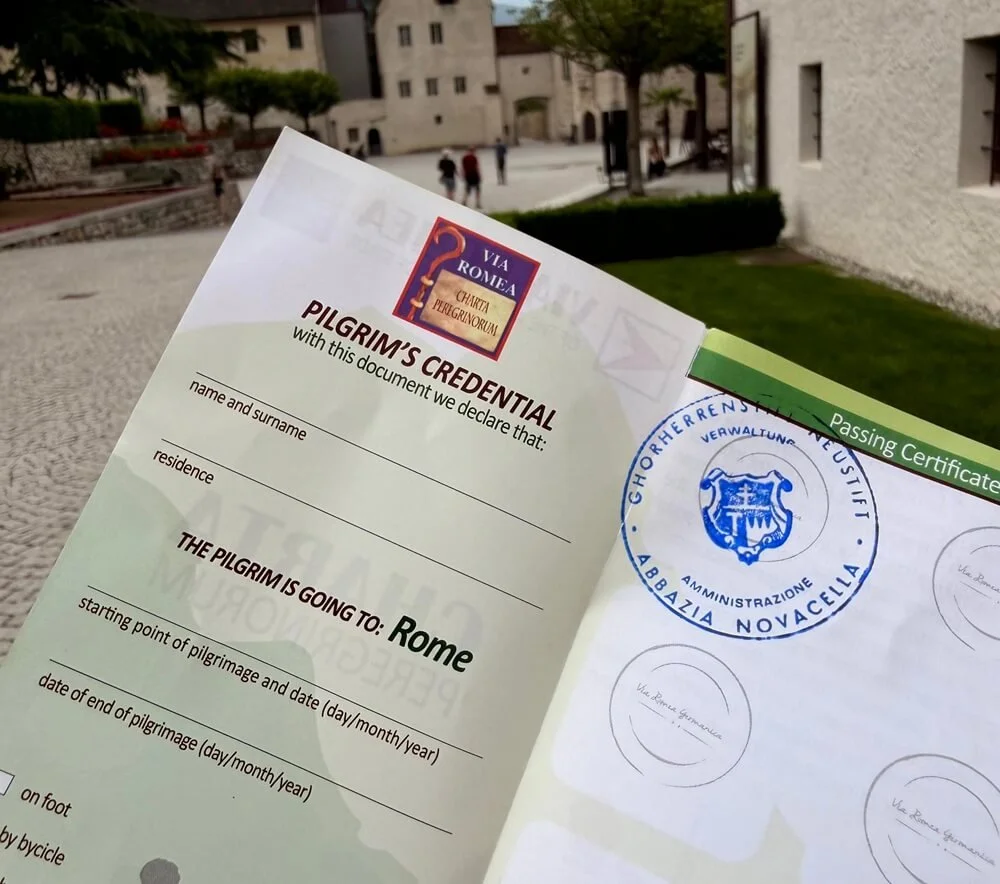
getting our pilgrim passport
I had to do a bit of digging on what was the route about.
The Via Romea Germanica retraces the steps of Abbot Albert of Stade, a pilgrim who walked to Rome in 1236 on a mission to ask the Pope for approval of his monastery's new rule.
In the Annales Stadenses, written in 1256, he described the best way for pilgrims from Germany, Sweden, Denmark, Norway, and the Baltic countries to reach Rome what he called the "Melior Way," or the better way.
Since then, kings, popes, merchants have all walked this road. It was for centuries the main artery between the Germany and Rome. Think of it as the alternative Camino to the better known Via Francigena, with which it shares the final section into Rome.
It was officially recognised as a European Cultural Route in 2020. So yes, it's legitimate. And almost no one in the travel world seems to be talking about it.
Day 1: The Abbey Where It All Begins
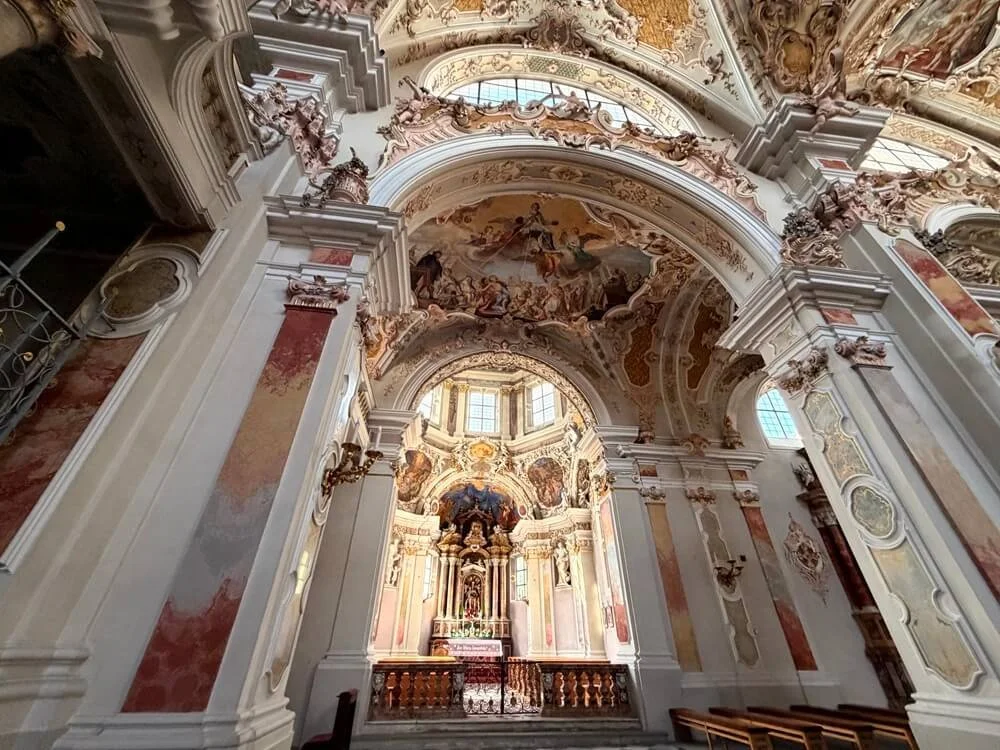
the grand novacella abbey
The abbey was founded in 1142 by Bishop Hartmann of Bressanone, with a very clear purpos
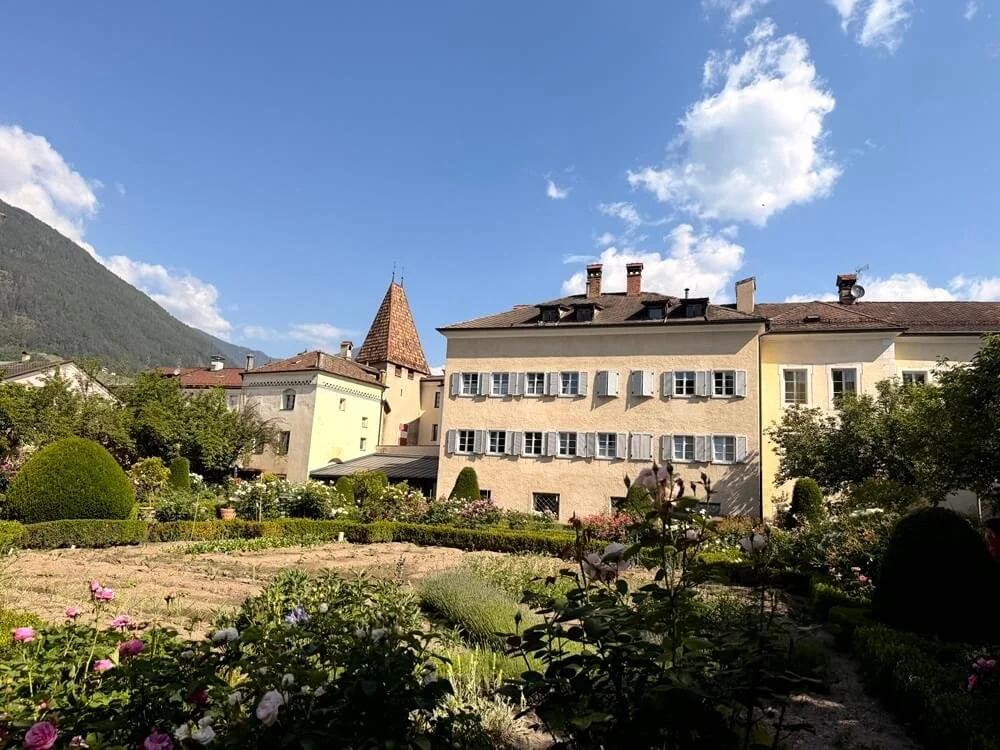
We started at Novacella Abbey, just outside Bressanone.
The abbey was founded in 1142 by Bishop Hartmann of Bressanone, with a very clear purpose: to offer shelter and assistance to pilgrims coming from Northern Europe, weary from their long journey across the Alps.
It has been welcoming walkers headed for Rome for almost 900 years. The Augustinian monks still live there. They still make wine from the vineyards that wrap around the complex. And they will still stamp your pilgrim passport before you set off.
We got our stamps, had a wine tasting and explored the vineyards.
Day 2: The Chestnut Route and the Free Milk
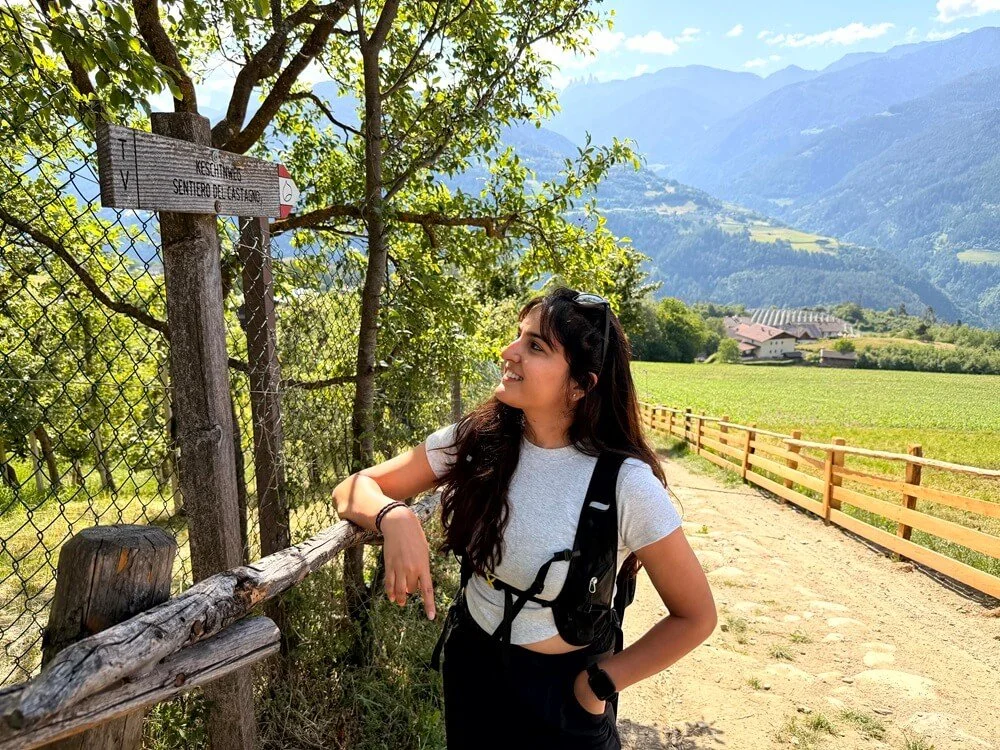
starting the hike via the chestnut route
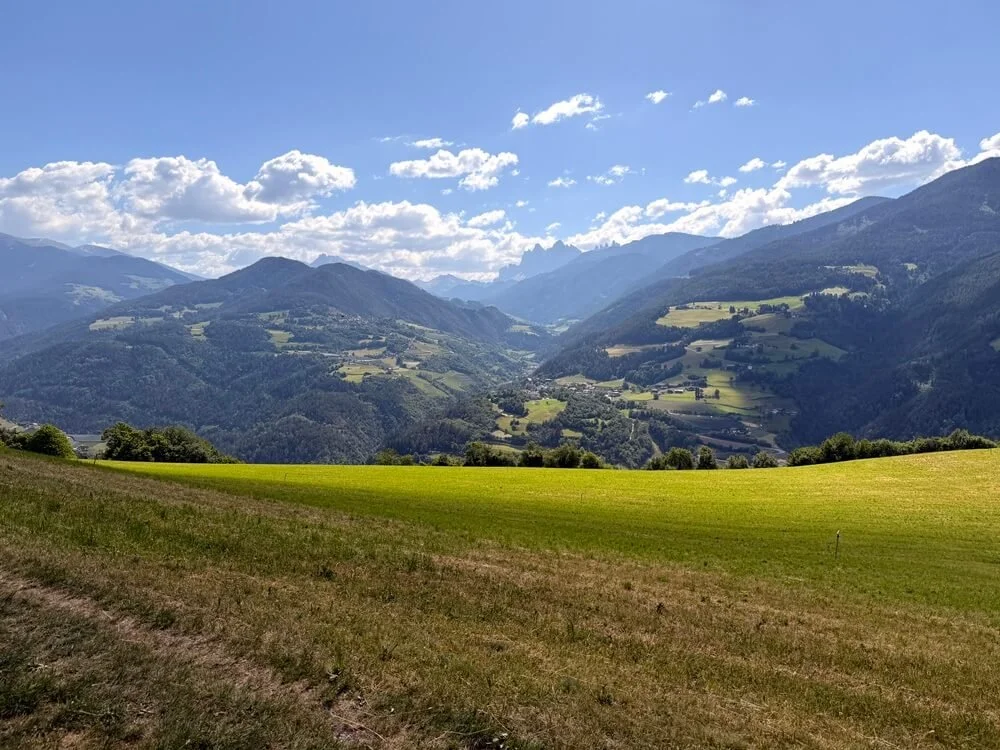
gorgeous meadows with views of the dolomites
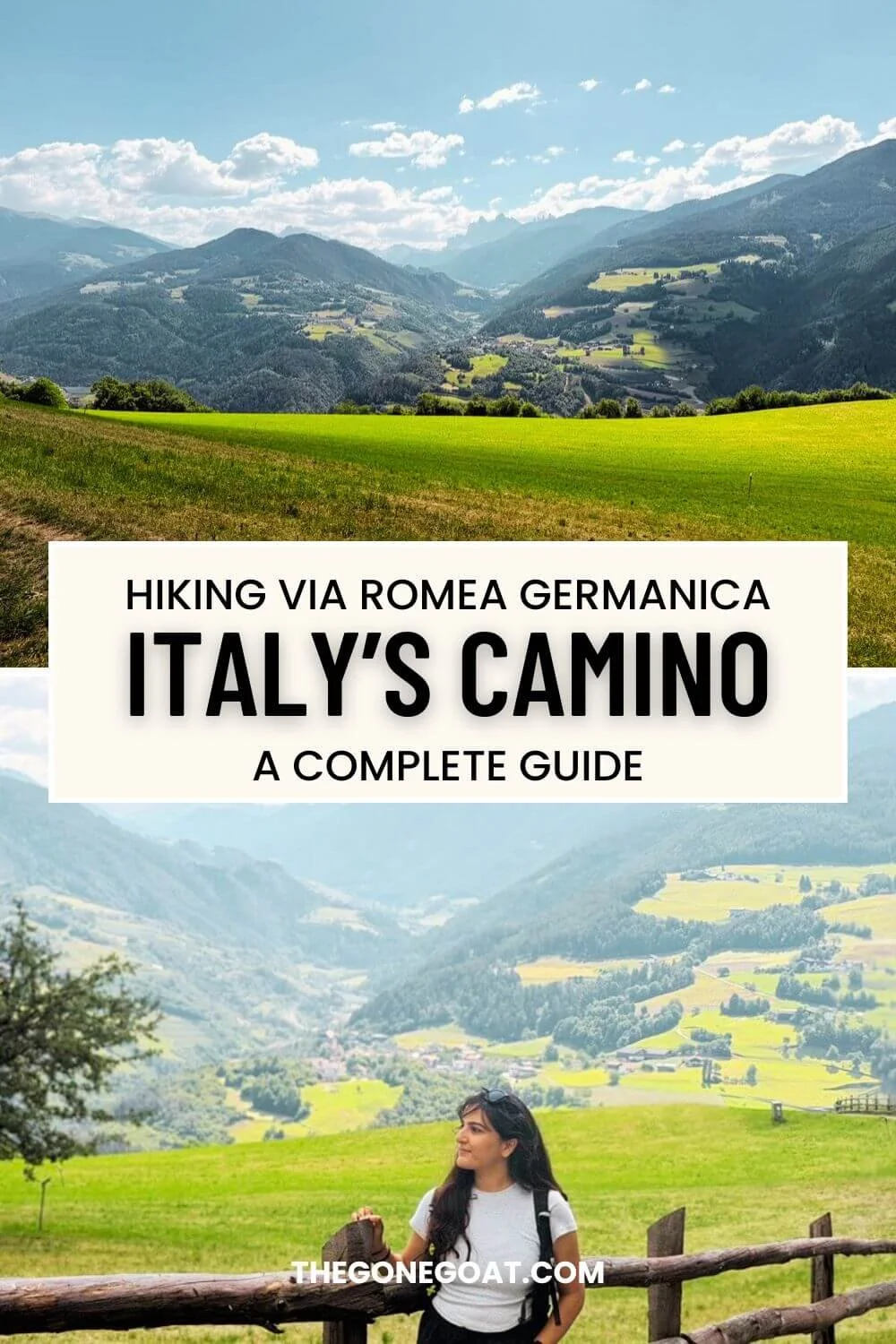
The second day took us along what's known as the Chestnut Route, through the high plateau of Ritten and it looked like a real Windows wallpaper.
There were open meadows, apple orchards and the Dolomites peaking through the sun.
We walked through these tiny villages where locals leave out milk for passing hikers. I also thought the villages here were super scenic and it is also not too far from the jagged peaks if you decide to do a Camino here.
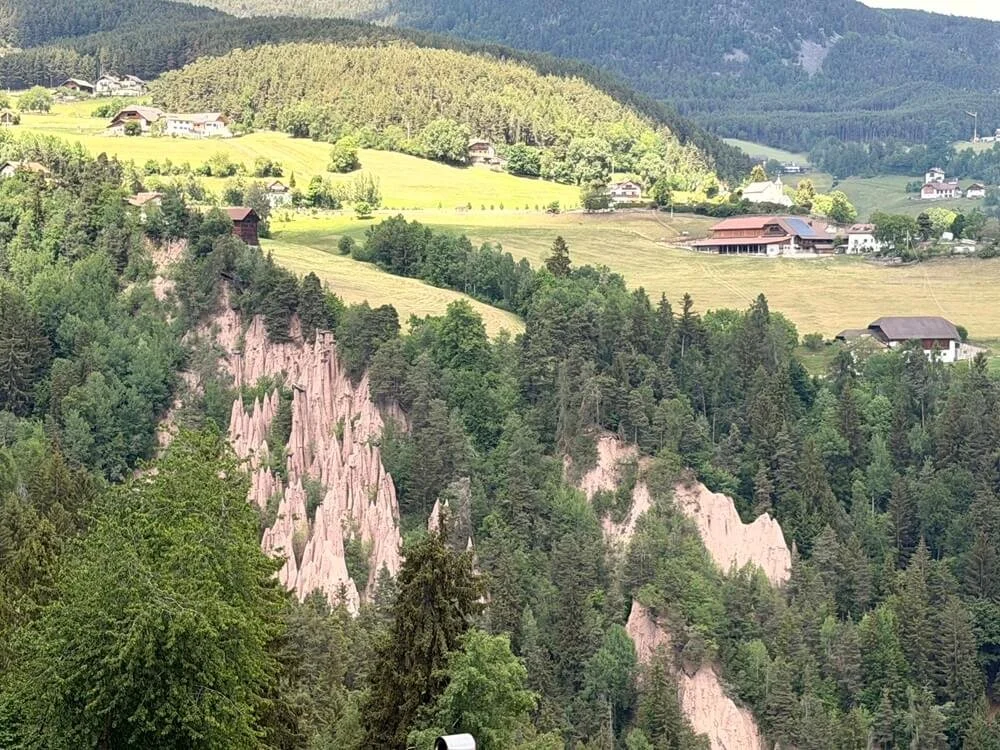
the earth pyramids in collalbo
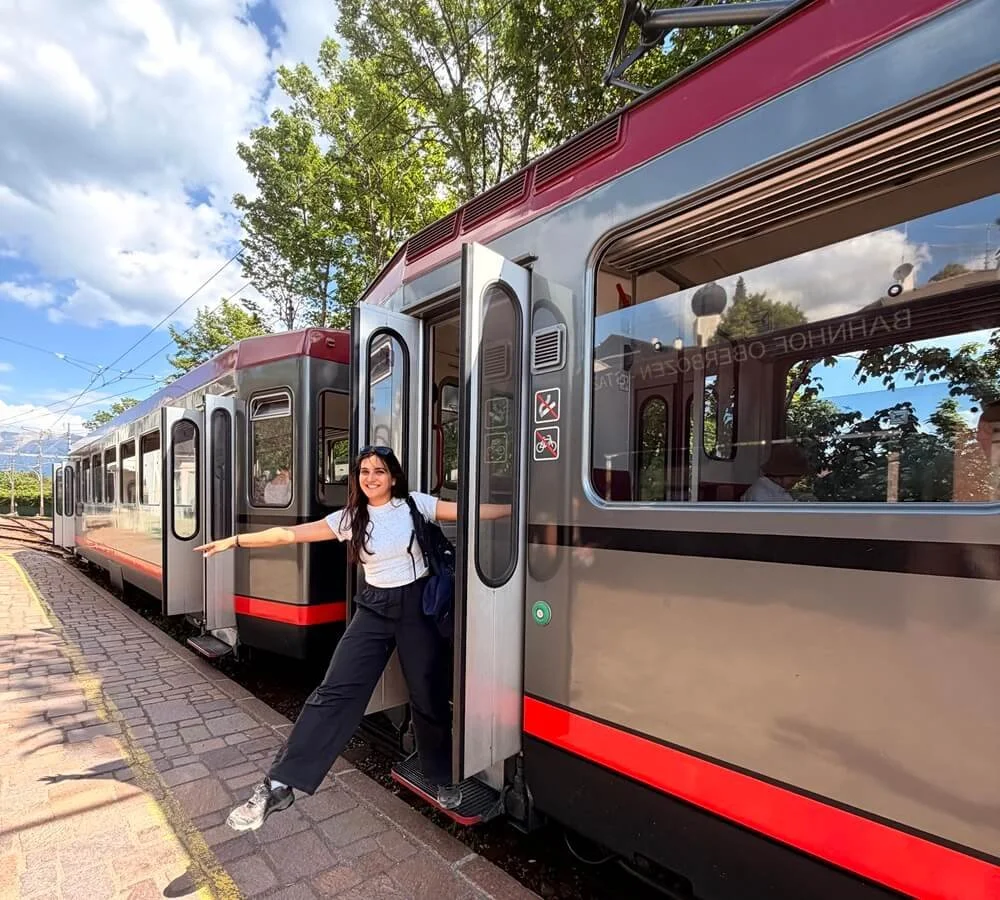
taking the ritten railway train
Later in the day, we reached Collalbo. I had no idea that South Tyrol had earth pyramids. These are unique geological formations created thousands of years ago when retreating glaciers left behind debris and rocks. The ones on the Ritten plateau are considered among the highest and most striking in Europe.
We ended the day on a scenic narrow-gauge railway through the countryside and took the Ritten Railway in Collalbo when heading towards Bolzano.
Day 3: Bolzano, the Gateway to the Dolomites
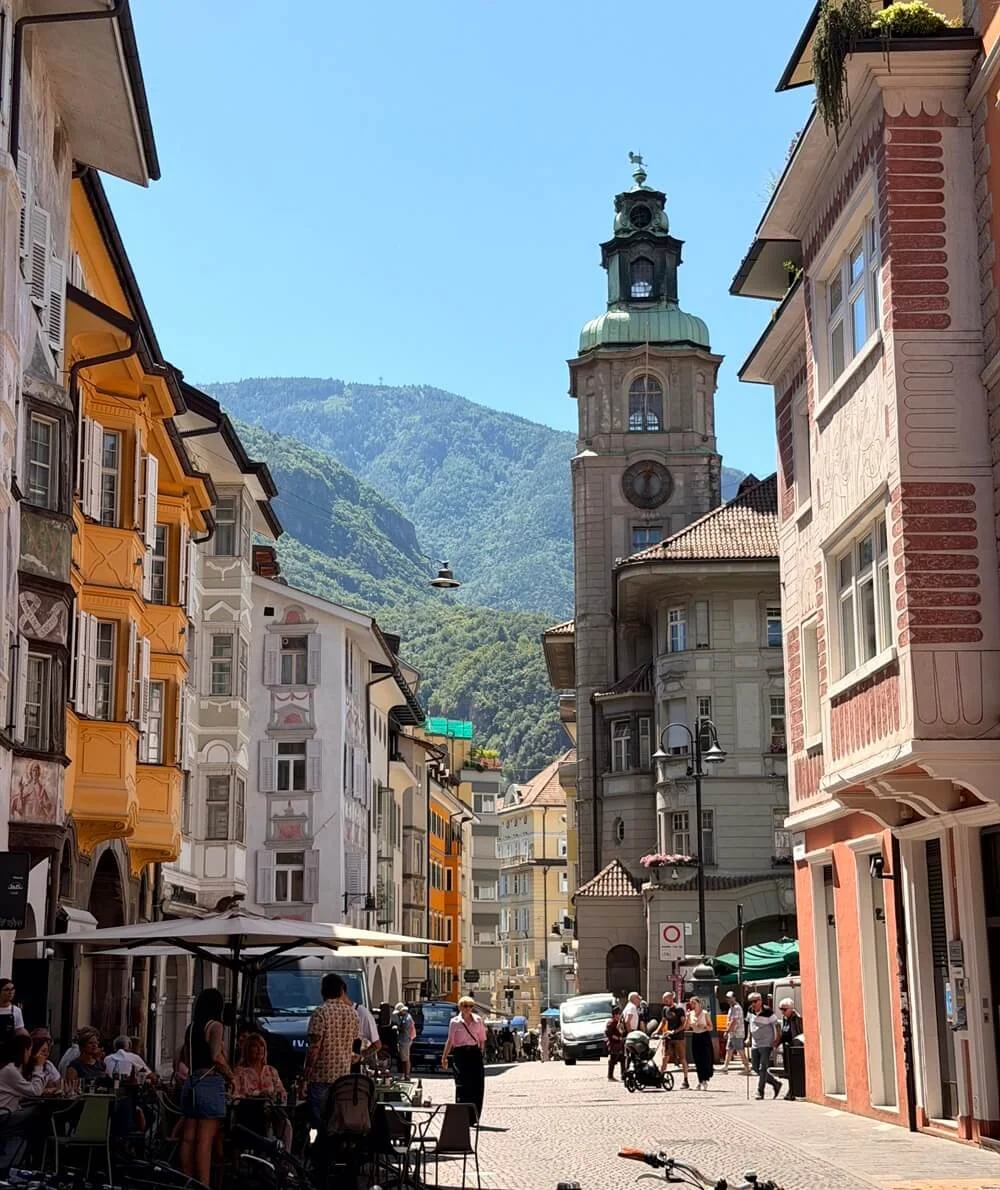
in bolzano
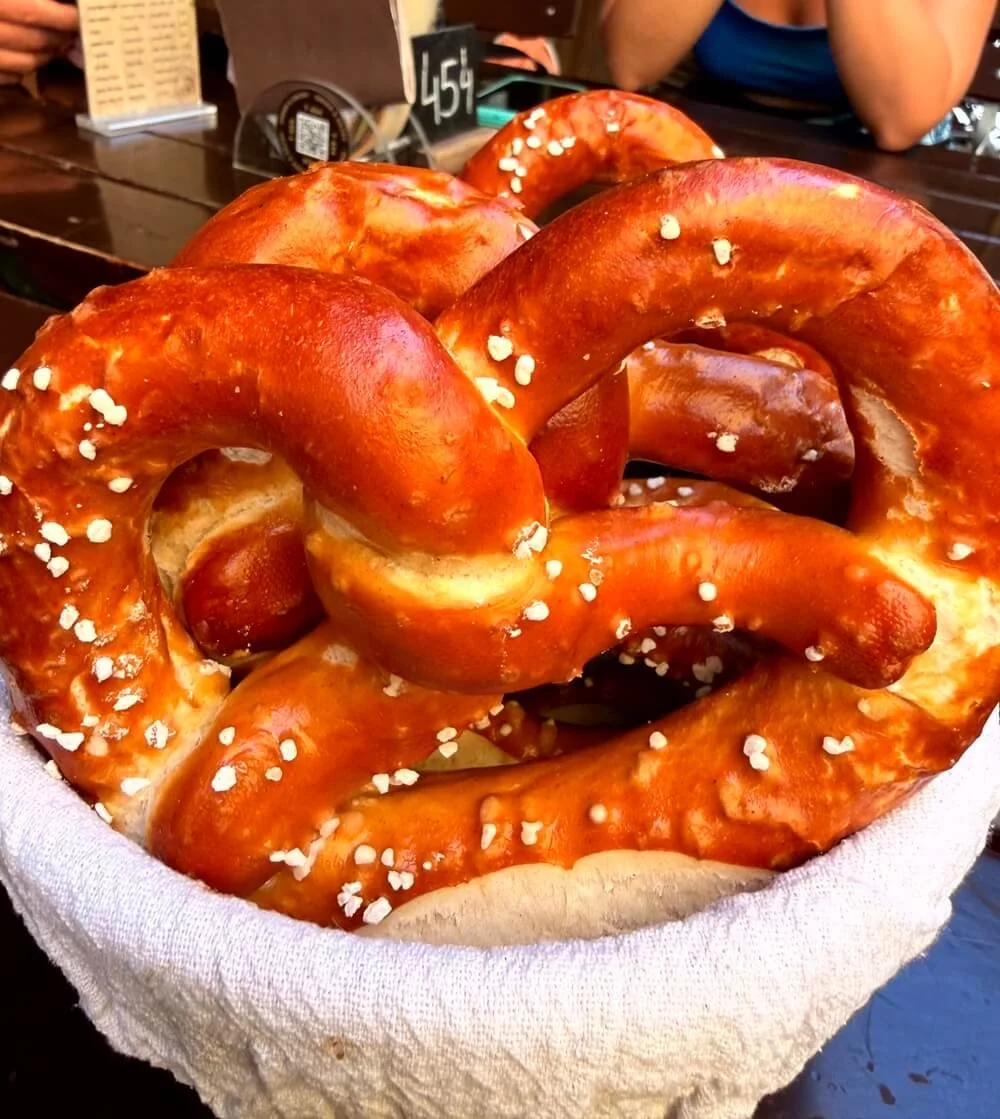
german pretzels in bolzano
By day three we were in Bolzano, and this is the part that surprises people who haven't been to this part of Italy before.
You're technically in Italy. But it doesn't feel like Italy.
There are pretzels in bakeries and signs in both Italian and German. Architecture that reads more like Bavaria than Tuscany. That's because you're in South Tyrol: a region with its own distinct cultural identity, shaped by centuries of shifting borders and a strong Germanic heritage that never really went away.
It's one of those places that makes you realise how blurry European borders have always been, and how much richer places are for it.
Why This Route Matters
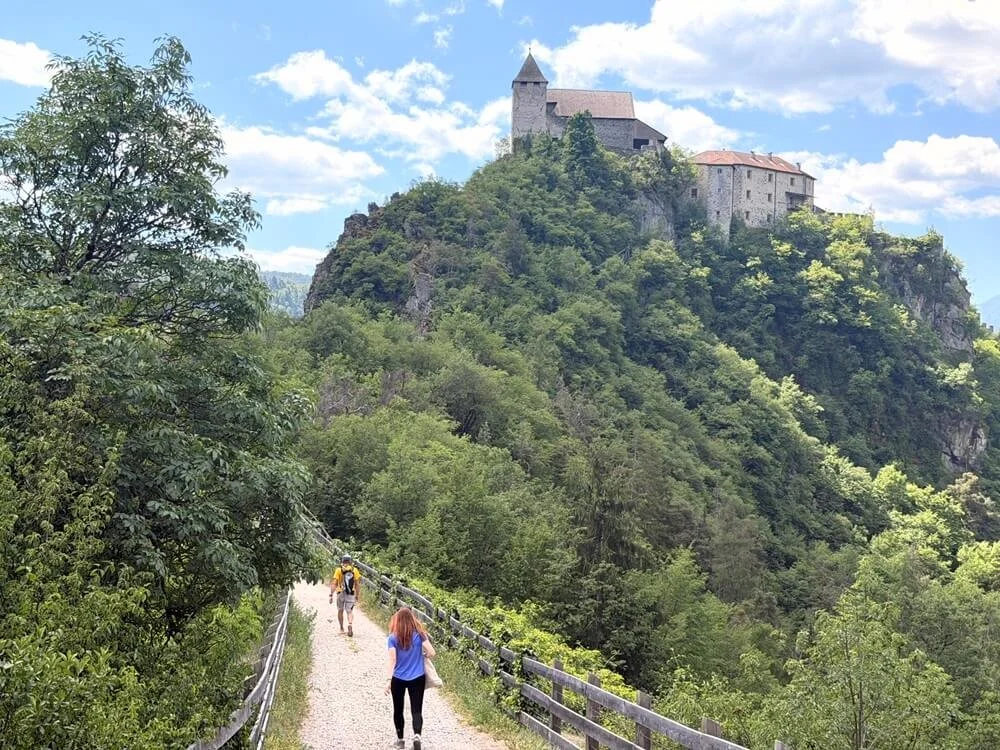
why do the romea germanica in italy?
A hike like this does something that faster travel doesn't. You slow down enough to actually notice where you are. The texture of the landscape changes day by day.
You move through villages rather than past them. You understand, in a physical way why these parts are worth exploring.
The Via Romea Germanica isn't as well-known as the Camino de Santiago. It doesn't have the infrastructure, the Instagram presence, or the cultural shorthand. But it has the history, the landscapes and something that’s gaining popularity overtime.
FAQ: Via Romea Germanica & Walking Italy's Pilgrimage Routes
What is the Via Romea Germanica?
It's one of Europe's oldest pilgrimage routes — 2,200 kilometres from Northern Germany to Rome, crossing Austria and Italy. It follows the path first documented in 1236 by Abbot Albert of Stade, who wrote what was essentially a medieval travel guide for pilgrims heading to Rome from Northern Europe. It was officially recognised as a European Cultural Route in 2020.
Why walk this route over the Camino de Santiago?
The honest answer is: fewer people. The Camino Frances in Spain can see hundreds of walkers a day on the same trail. The Via Romea Germanica is quieter, less commercialised, and genuinely feels like a discovery. You're also moving through a part of Europe such as South Tyrol, the Dolomites, Tuscany, Umbria with extraordinary variety in landscape, food, and culture. If you've already done the Camino and want something that feels more off-radar, this is it.
How long is the full route?
The full Via Romea Germanica is 46 stages from Germany to Rome: realistically 2 to 3 months if you're walking the whole thing. Most people (myself included) walk a section.
What are the other major pilgrimage routes in Italy?
A few worth knowing:
Via Francigena — the most famous Italian pilgrimage route, running from Canterbury through France and Switzerland to Rome. More infrastructure and more walkers than the Via Romea Germanica.
Via Romea Strata — another Rome-bound route, this one coming from Venice and northeastern Europe. Less known than the Francigena but growing in popularity.
Cammino di Francesco — a route through Umbria and Lazio following the paths of St Francis of Assisi. Shorter, more contained, beautiful.
Who should I book with?
For the South Tyrol section, I walked with SloWays, who organised everything through the Italian Tourism Board. They specialise in Italian pilgrimage and slow travel routes and handle logistics, accommodation, and luggage transfers so you're not carrying everything on your back. I'd recommend them especially if it's your first time on a route like this.
How do I plan the route myself?
The Via Romea Germanica website (viaromeagermanica.it) has stage-by-stage info, maps, and accommodation listings. You can also get your pilgrim passport stamped at churches, abbeys, and official stops along the way — Novacella Abbey being one of the best starting points for the South Tyrol section. Apps like Komoot have the GPS tracks for most stages.
What time of year is best to walk?
Late spring (May–June) and early autumn (September–October) are ideal for the northern Italian section. Summer gets hot and crowded in the towns; winter can close some mountain sections. The Chestnut Route is particularly gorgeous in autumn when the trees are turning.
What fitness level do you need?
The South Tyrol section involves some elevation but the Ritten plateau sits over 1,000 metres but nothing that requires technical hiking experience. If you can walk 15–20km a day comfortably, you'll be fine. Trail runners or sturdy walking shoes, layers, and a light pack is all you need.
Do I need to speak Italian or German?
In South Tyrol, both Italian and German are spoken — but English is widely understood in towns and accommodation along the route. Don't stress this one.
Like this story? PIN IT!