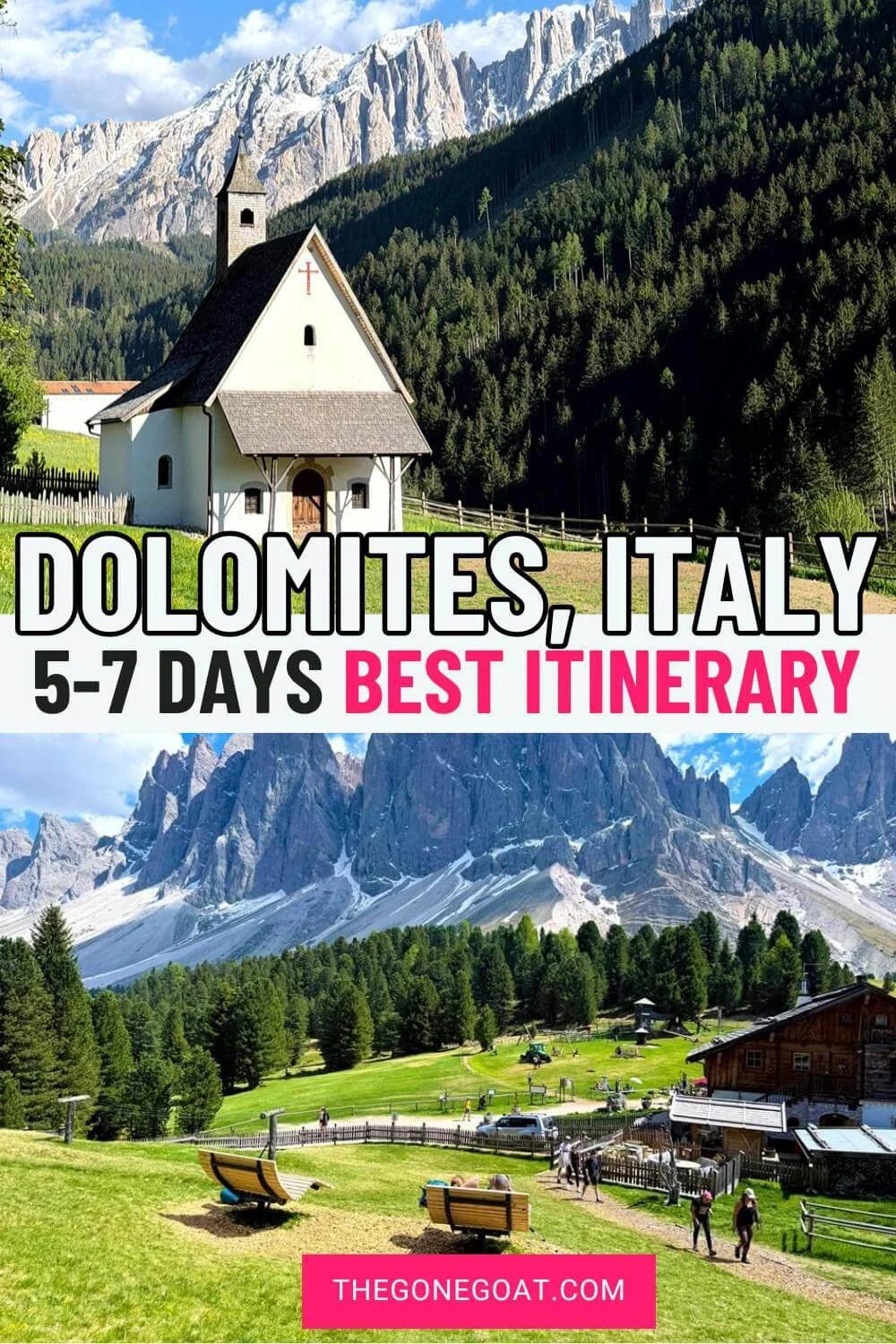
My Real Dolomites Itinerary: 5 to 7 Days (What I Loved About It)
/Everyone thinks of Milan, Florence, Rome when they think Italy — the history, the museums, the cities. But if you're after nature, the Dolomites is the first thing I think about and you have to visit.
I spent spring and summer time visiting the Dolomites in Italy and I absolutely loved it. I believe the hype, and I met so many people who were traversing different trails to truly immerse themselves in “accessible” nature.
Where else can you walk everywhere with meadows and have the best aperol spritz and donuts ofcourse?
The complete Dolomites Itinerary can be done in 5 to 7 days, and if you have no car, there is also no problem because there are towns when you can base yourself in.
I must add that you shouldn’t be chasing all the Instagram highlights otherwise you will land in the same queues, and what everyone is doing (basically ticking things off instead of truly experiencing them).
I found so many hikes popular and not-so-popular ones, and routes that have a cable car access and some with a bit more hiking involved.
Here is my Dolomites itinerary that covers 5 to 7 days to a week.
Also read: The Dolomites I loved: 10 Best Things To Do
Why the Dolomites
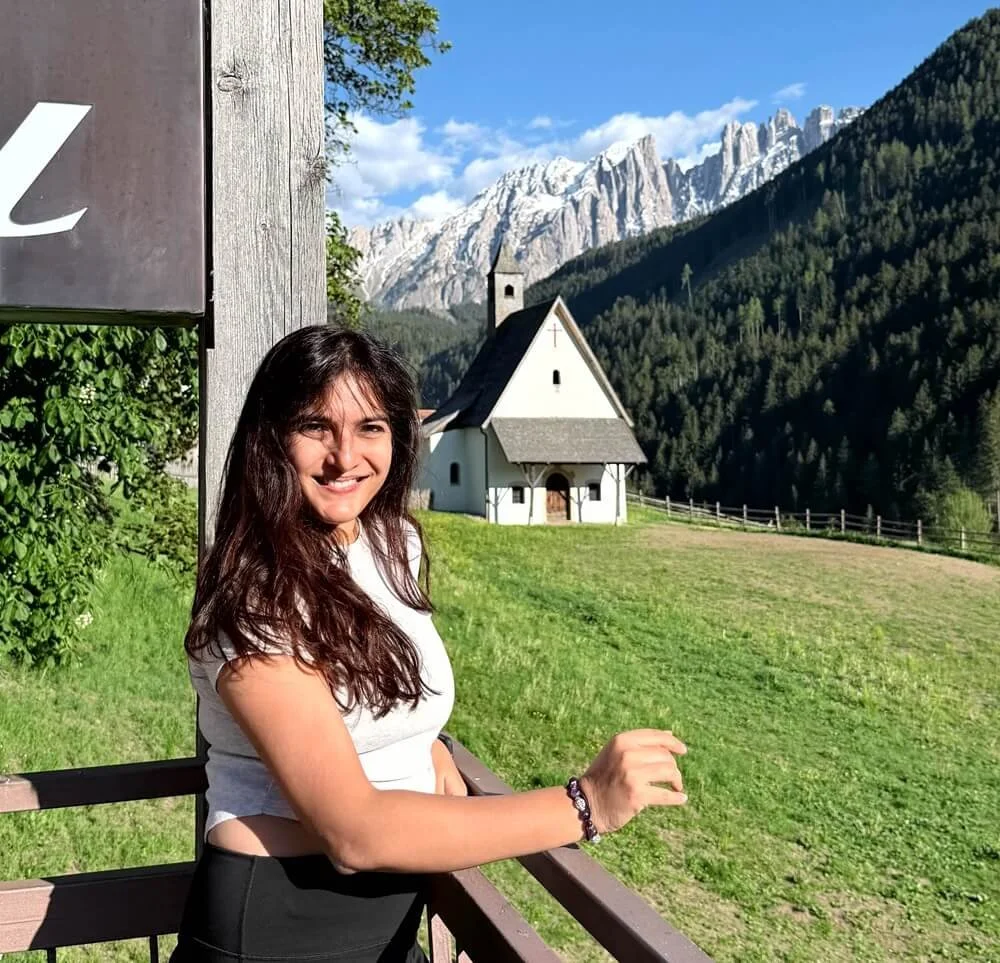
why the dolomites? i mean this was just a random stop when we were driving from lake garda to lake carezza
South Tyrol isn't quite Italy the way you'd expect. Honestly, I was so surprised seeing this and how many Germans were here hiking around.
It was part of Austria until after World War I and most people here speak German first, Italian second, and some places still go by both names (Bolzano/Bozen, Brixen/Bressanone).
I found food in Bolzano like speck and knödel one night and ofcourse good pizza and pasta as well.
Where Should You Stay as A Base In The Dolomites
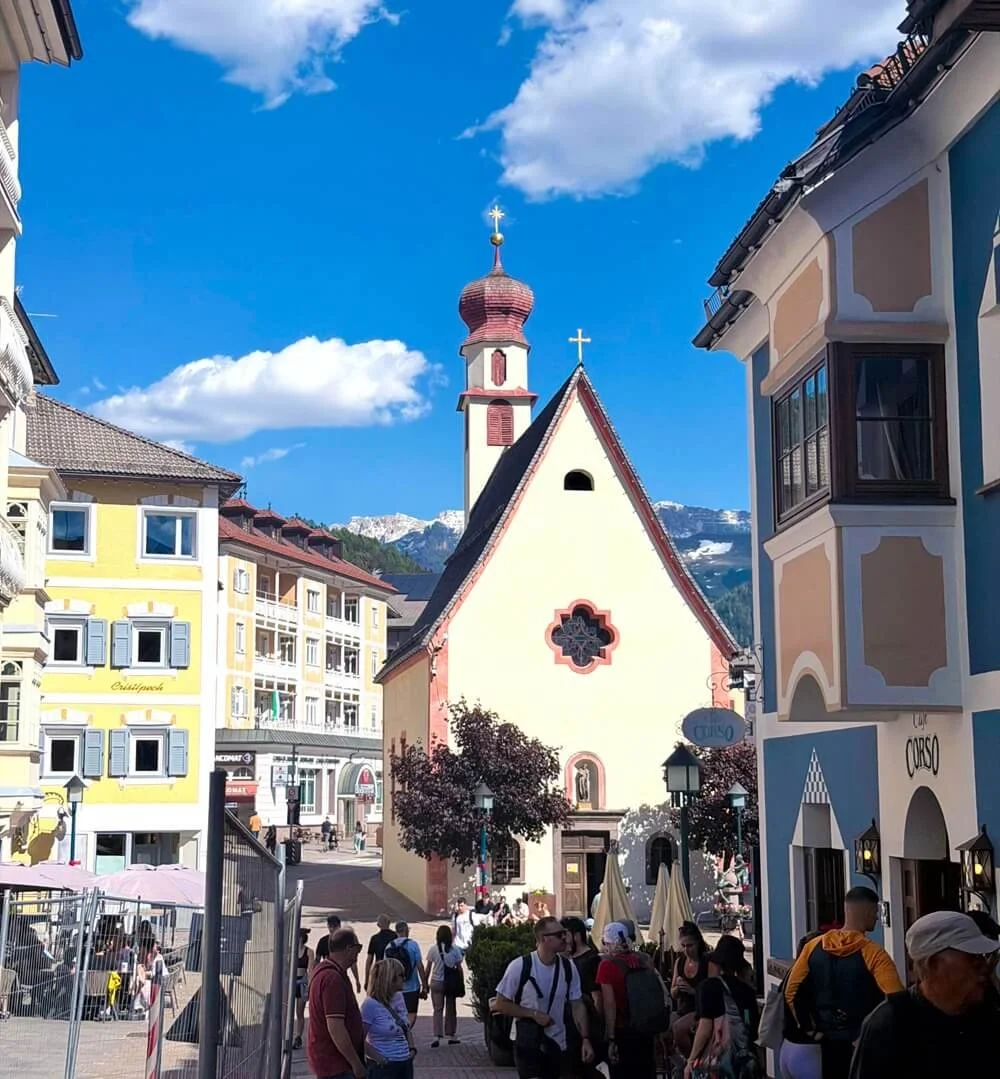
in ortisei: here’s a guide on where you should stay in the dolomites on your itinerary
The Dolomites aren't one place as I thought they would be and they're split into different valleys, and most people base themselves in Bolzano, Ortisei or Cortina.
But if you want to skip the crowds, I'd point you toward Brixen or Santa Cristina, Selva, Castelrotto. Both felt like real towns without the crowds rather than very touristy places, unlike Ortisei, Bolzano and Cortina in peak season.
Also read: Where To Stay in The Dolomites: Places & Hotels I Loved!
Here's the breakdown:
Ortisei
Great for: the easiest hiking access in the whole region. Three cable cars connect you straight to Seceda, Resciesa and Alpe di Siusi without needing to leave town. If you want to change scenery daily without driving, this is it.
Where to stay:
Adler Dolomiti (luxury)
Hotel Cosmea (mid-range)
Hotel Ronce (mid-range)
Romantik & Family hotel (budget) (Val Gardena area)
Car needed: No.
Transport: Direct bus from Bolzano, plus easy onward transit through the valley.
Downside: it's popular for a reason, so expect crowds in summer.
Cortina d'Ampezzo
Great for: first-timers who want one classic base with everything close by. You have Cinque Torri, Rifugio Lagazuoi, Lago di Sorapis, all within half an hour.
Where to stay:
Grand Hotel Savoia (Luxury)
Hotel Menardi (mid-range)
Hotel Columbia and spa (mid-range)
Hotel Nigritella (budget)
Car needed: Helpful, though doable without one.
Transport: Buses connect to Alta Badia and beyond, but having a car opens up more.
Bolzano
Great for: a home base if you're bouncing between multiple valleys — it sits central, with bus and train links to Val Gardena, Val di Fassa and beyond. Not so much for hiking straight out of town though; it's down in the Adige Valley and can get brutally hot in summer.
Where to stay:
Villa Giacomuzzi (luxury)
Parkhotel Mondschein (mid-range)
Eisenhut Boutique Hotel (mid-range)
Stay Cooper (budget)
Car needed: No
Transport: Trains and buses to almost everywhere else in the Dolomites.
Brixen
Great for: a quieter, more local-feeling base with access to the Val di Funes area such as Odle peaks, wildflower meadows, fewer people.
Where to stay:
Adler Historic Guesthouse (luxury)
Soley Suites (mid-range)
Gasthof Goldenes Lamm (budget)
Brixen Youth Hostel (budget)
Car needed: No but it's a bit further from the trailheads, so budget extra time.
Transport: Trains connect Brixen to Bolzano and beyond easily.
How To Get To The Dolomites?
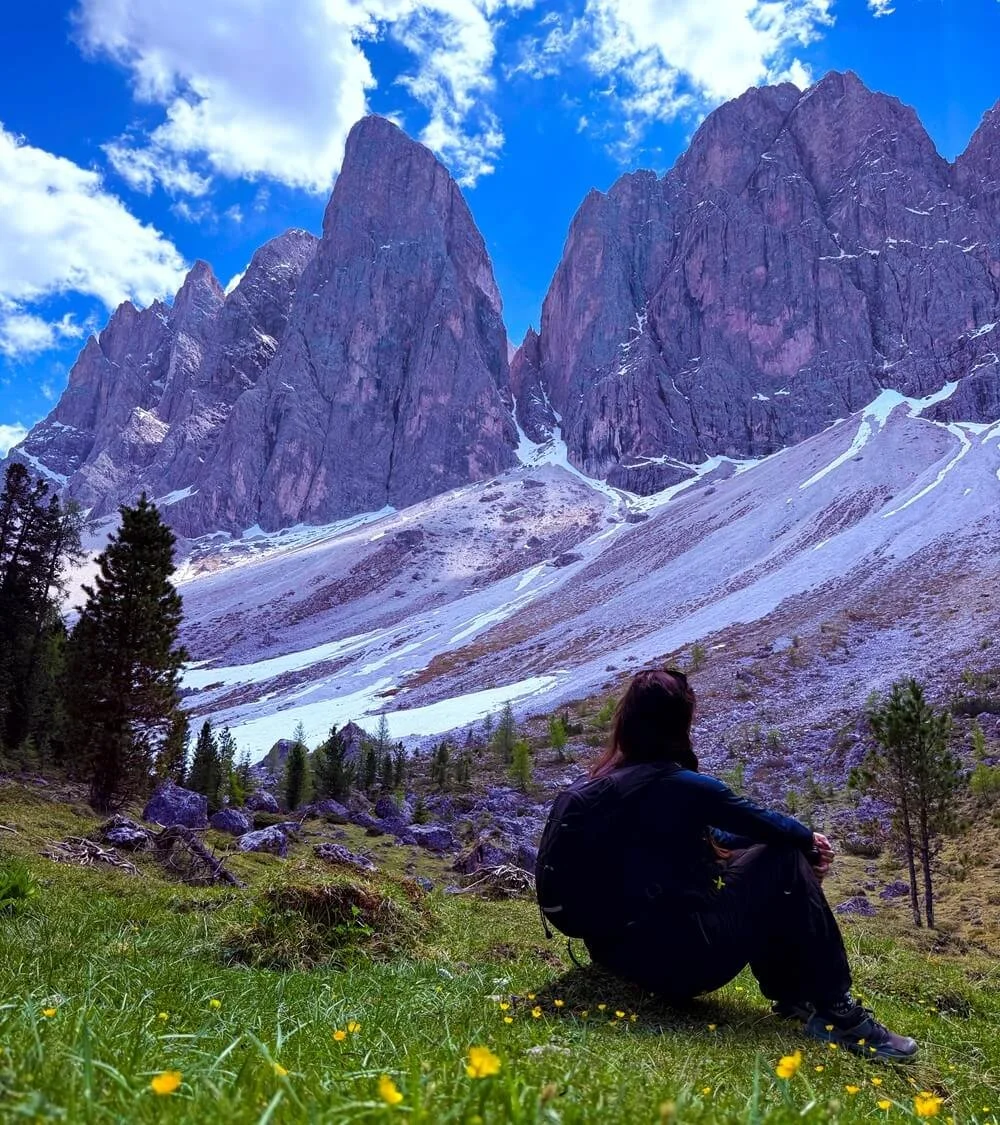
how do you get to dolomites? here’s my route
There's no direct airport into the Dolomites, so getting there takes a bit of planning either way.
My route: Milan → Verona (rented a car here) → Lake Garda → drove to Bolzano.
If you'd rather skip Milan, you can fly straight into Verona instead and start from there.
If you prefer public transport, from Verona there is a train to Bozen (the German name for Bolzano) — it drops you right in the Dolomites' main gateway city. Once you are in Bolzano, you can plan to get there by bus to Brixen, Dobbacio/Ortisei, and Cortina.
Driving in Dolomites
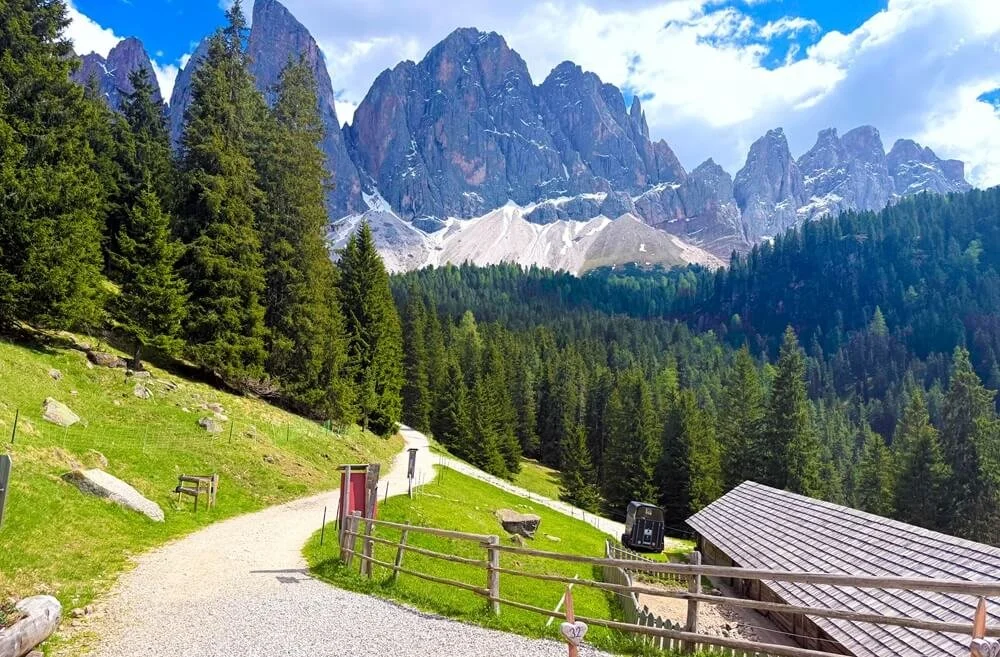
the experience of driving in the dolomites + taking public transport
The roads are super narrow and can be nerve wracking. If you’re good driver and are aware of the rules and driving in Europe, then it is no problem but for a beginner I wouldn’t recommend it.
I would recommend renting a car here. We took ours from Verona airport.
The distances can be long: Two towns might look 20 minutes apart on the map, but the roads are narrow, winding, and full of hairpin turns so if you are leaving to hike early in the morning, plan it a bit more in advance.
Parking colors matter. White lines mean free parking, blue lines mean paid. You need some coins as some machines don't take cards, and cash still comes in handy for smaller lots.
Fill up before you climb. Fuel gets pricier at higher elevations, and some passes go 50+ km without a station, so top up in the valley towns before heading up.
Get to popular trailheads early. Spots like Seceda or Alpe di Siusi fill up by 9am in peak season, so if you're not staying near the trailhead, plan for an early start.
The 5-7 Days Dolomites, Italy Itinerary
Every Dolomites itinerary online reads the same and it is simply impossible to reach everywhere because moving around is exhausting everyday!
I started from the lower level (Bolzano) and eased myself into the hikes and I think this is the best way without burning out and seeing everything.
The most popular in the Dolomites is Tre Cime di Lavaredo (the three distinctive battlements of rock), followed by Seceda and the emerald waters of Lago di Braies.
But the crowds can really make it a bitter experience, hence you won’t lose out if you did 1 of the 3 or just 1 of each and pick an offbeat hike like what I did.
Day 1: Lake Carezza & Bolzano
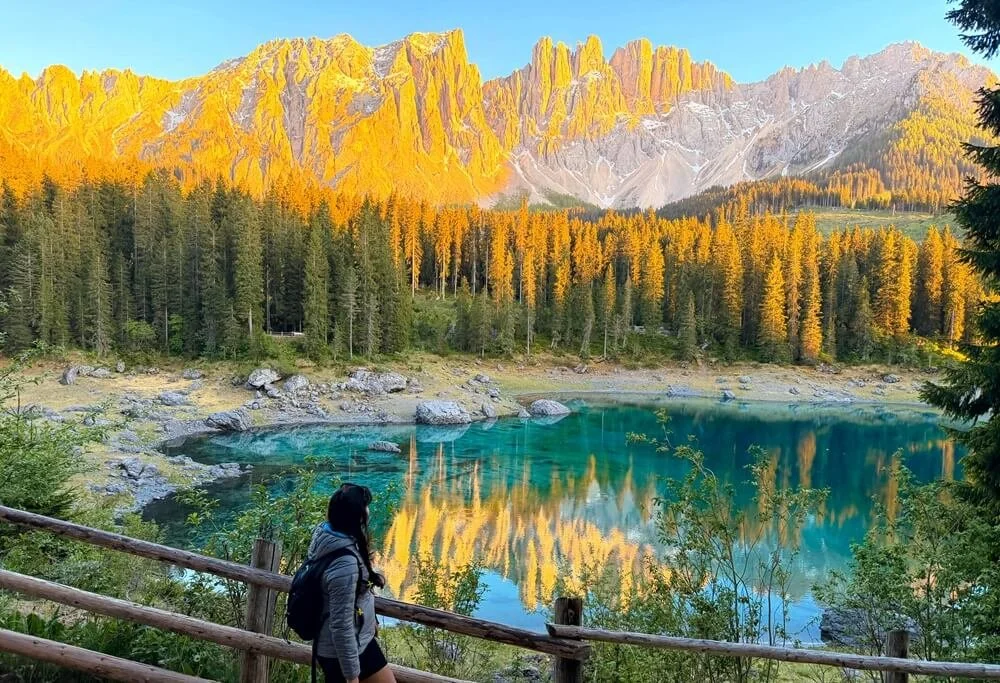
i went to lake carezza twice - once in the morning and during sunset which was so gorgeous
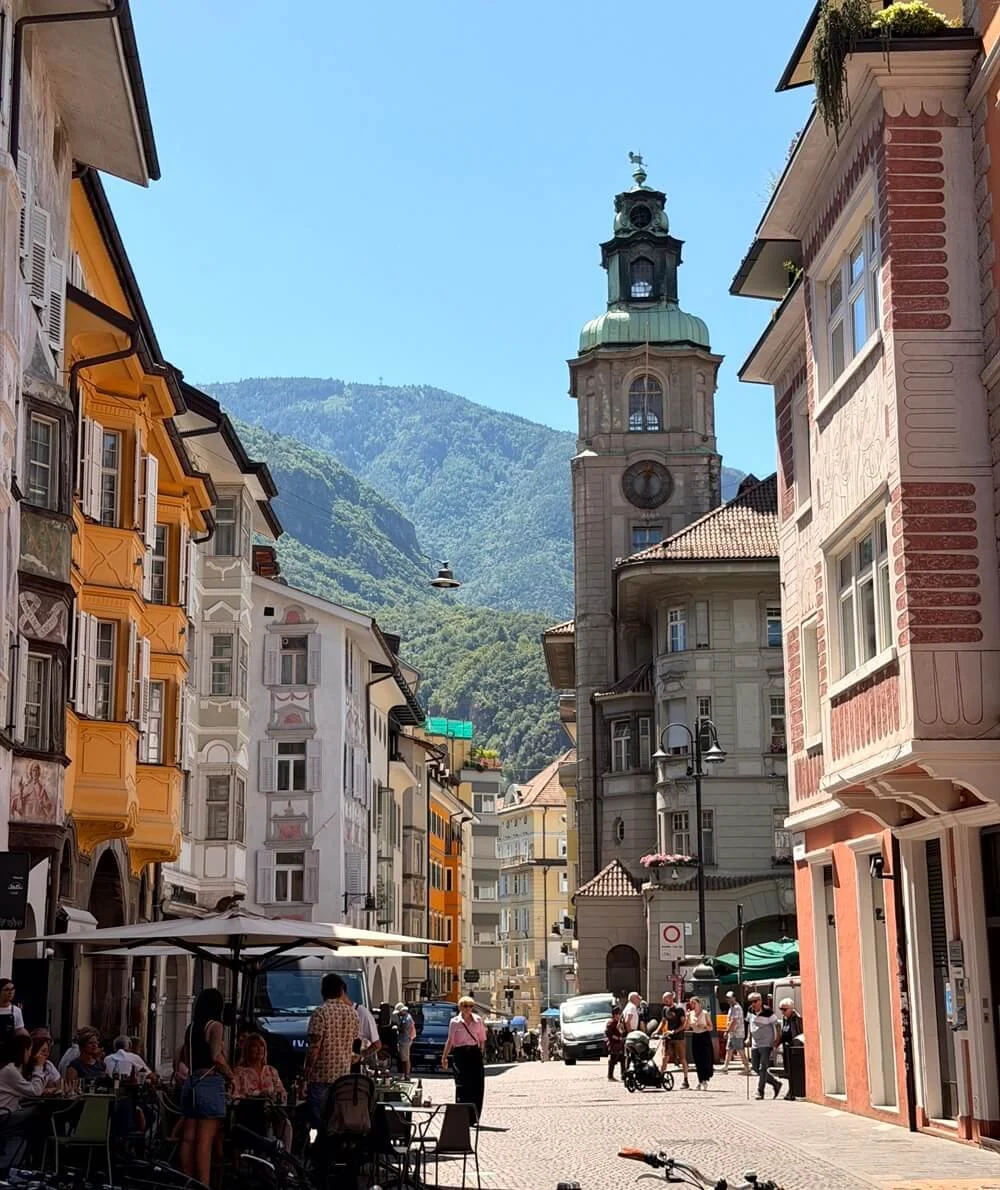
a view of bolzano town
The best way to ease into Dolomites is to start from the very bottom. So if you’re driving take the Lake Garda SS45 highway passing by Arco as you head towards Lake Carezza. It is 124km and takes about 2.5 hours.
I loved the colours of the water at Lake Carezza and considering how close it was to Bolzano — we had a really chill day. Ofcourse the views were stunning, I can’t tell you how gorgeous the views are of the lake then it made perfect sense to make a little walk around the woods.
From there, spend the night in Bolzano. Bolzano was such a big town and there were so many things to do like walk around, have a nice lazy dinner and gelato and packing some snacks from the convienence store for the next day’s hike.
Where To Stay in Bolzano
Villa Giacomuzzi (luxury)
Parkhotel Mondschein (mid-range)
Eisenhut Boutique Hotel (mid-range)
Stay Cooper (budget)
Day 2: Col Raiser - Seceda Hike & Ortisei
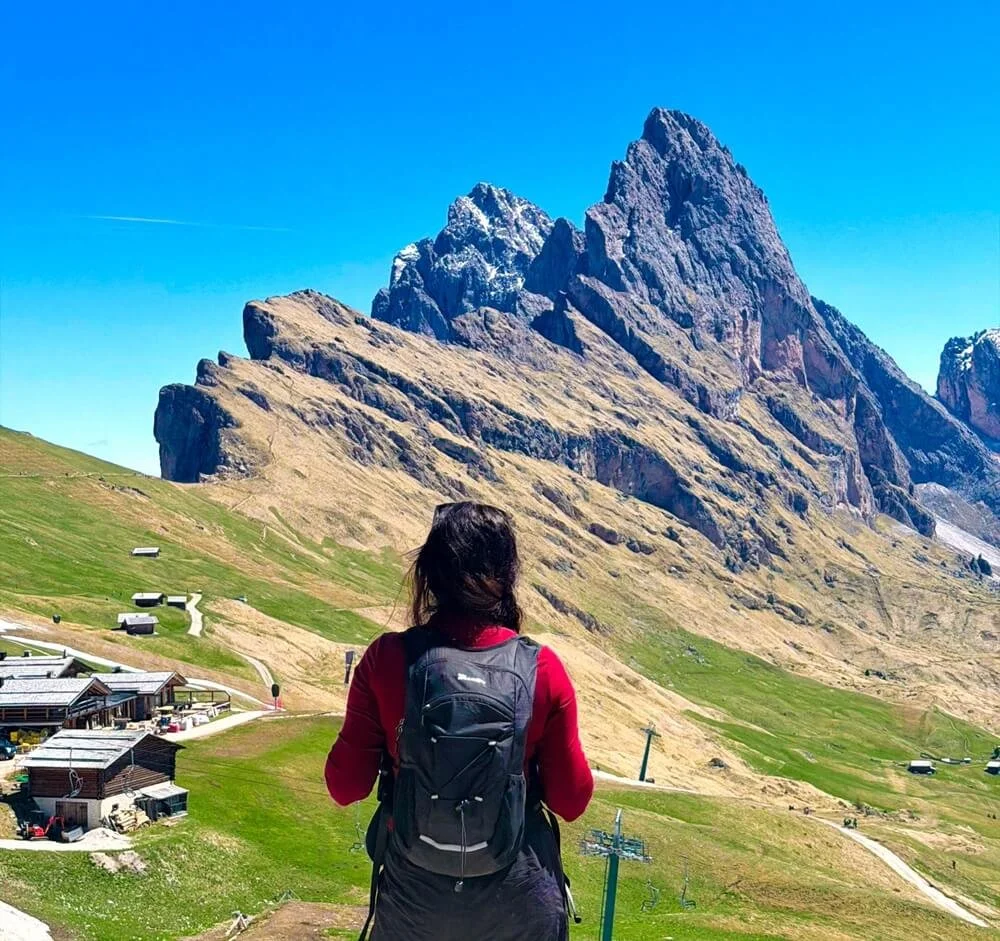
the iconic seceda hike but from col raiser
We woke up early to head towards Santa Cristina in Val Gardena, South Tyrol, Italy. It sits centrally in the Dolomites between Ortisei and Selva di Val Gardena.
You can leave at 8.30am and reach by 9.30am to park your car at Col Raiser. If you’re taking the bus, I would suggest staying a day in Ortisei and planning your hikes from there.
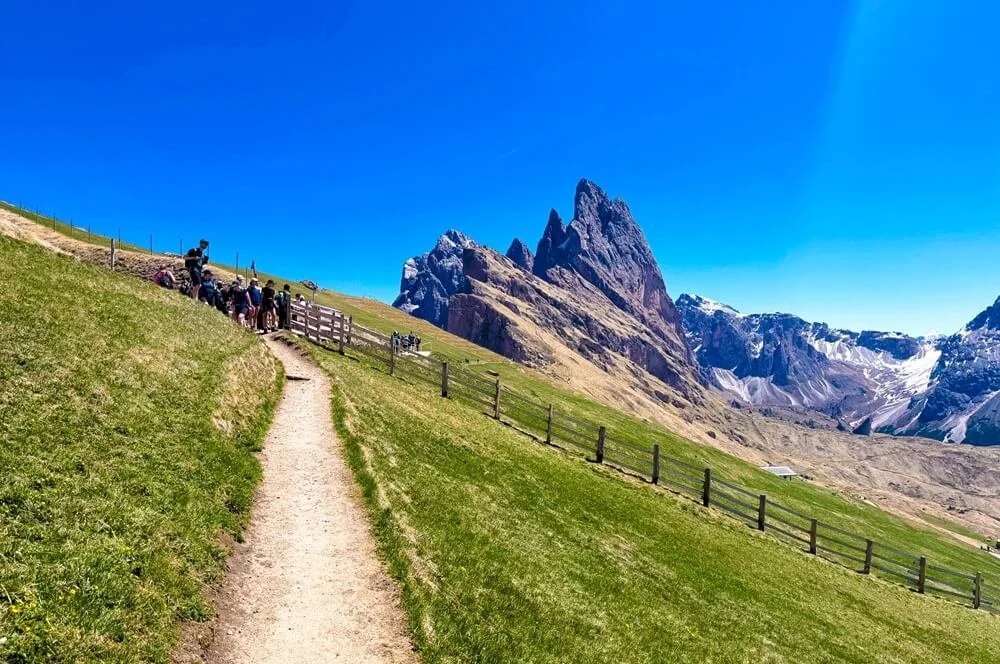
From the Col Raiser cable car station in Santa Cristina, the hike up to the Seceda ridgeline is roughly 9-10 km round trip with 400-550 metres of elevation gain, taking about 4-5 hours including breaks. It was not a steep hike and very doable with wide paths.
The only issue is that sometimes it can be hot because you are quite exposed. The hike and the views were stunning but because we were early in the season, the green patch that makes Seceda gorgeous or dramatic was kinda missing from the vantage point.
But we were so glad we didn’t take the direct Seceda cable. The Col Raiser cable car in Santa Cristina costs around €34 for a round-trip ticket, which is much cheaper than the direct Seceda cable car from Ortisei at €74 round-trip with also a much better experience.
After we reached Seceda ridgeline, we descended down to have the best brunch with amazing views Troier Hutte (Baita Troier Hutte). I ordered pasta, had some apple strudel and made friends with a group of ladies from Ireland who were on a women’s only adventure in their 70s.
After descending, we headed straight to Ortisei to spend the night there.
Where to stay in Ortisei
Adler Dolomiti (luxury)
Hotel Cosmea (mid-range)
Hotel Ronce (mid-range)
Romantik & Family hotel (budget) (Val Gardena area)
Day 3: Resciesa and/or Alpe di Siusi (Right From Ortisei)
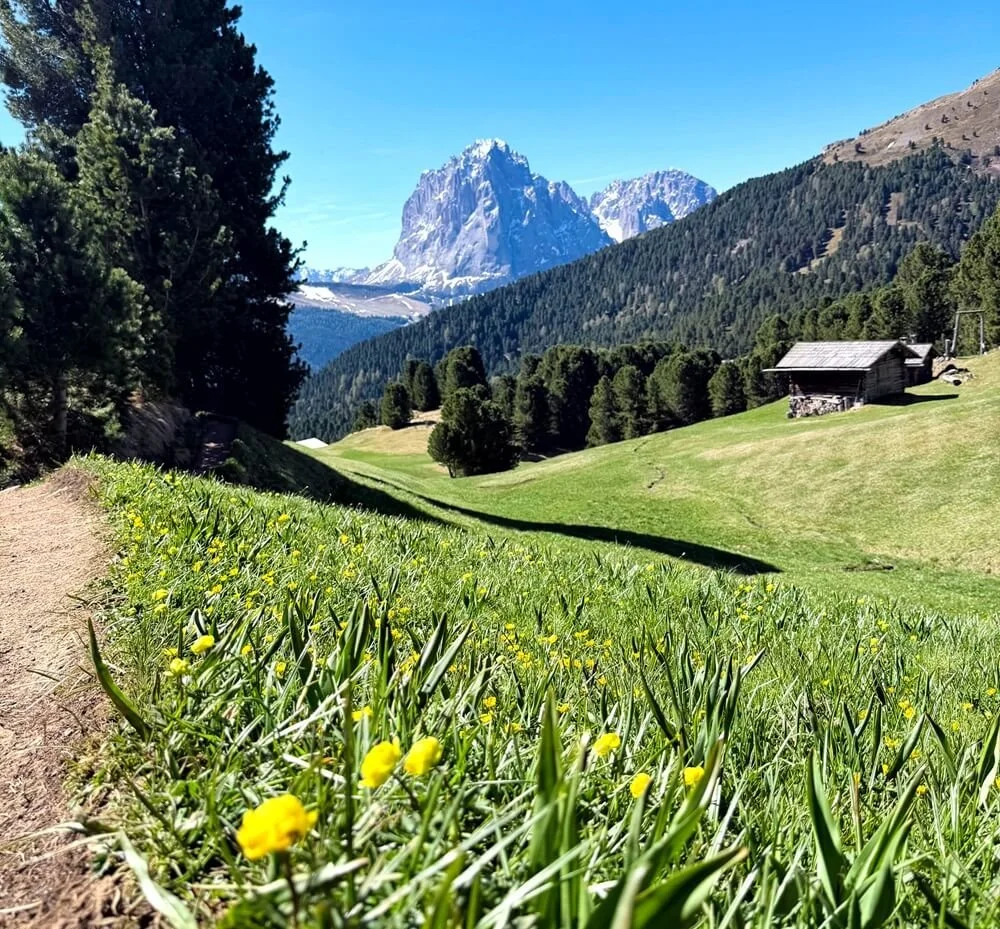
alpde de siusi
If you're staying in Ortisei for more than a day, this is the two hikes I would recommend doing since you can easily do both.
Resciesa — take the funicular up from Ortisei and you're on a high alpine plateau in five minutes flat. The easy loop out to the summit cross is about 5 km with 197 metres of elevation gain, roughly 1.5-2 hours, and for me the payoff is the views. You actually get to see Ortisei — Sassolungo, the Odle peaks, Seceda, the Sella group and Alpe di Siusi all visible at once. This is a good half-day option.
Alpe di Siusi — take the Mont Sëuc cable car up and you will arrive on Europe's largest high-altitude plateau, over 52 square kilometers of rolling meadow. I would say this is very gentle and the best way to have a chilled hike if you are with families. It is more about the scale of the landscape, so it's a nice contrast to Seceda's ridgeline.
Where to stay in Ortisei
Adler Dolomiti (luxury)
Hotel Cosmea (mid-range)
Hotel Ronce (mid-range)
Romantik & Family hotel (budget) (Val Gardena area)
Day 4: The Adolf Munkel Trail & Stay in Brixen
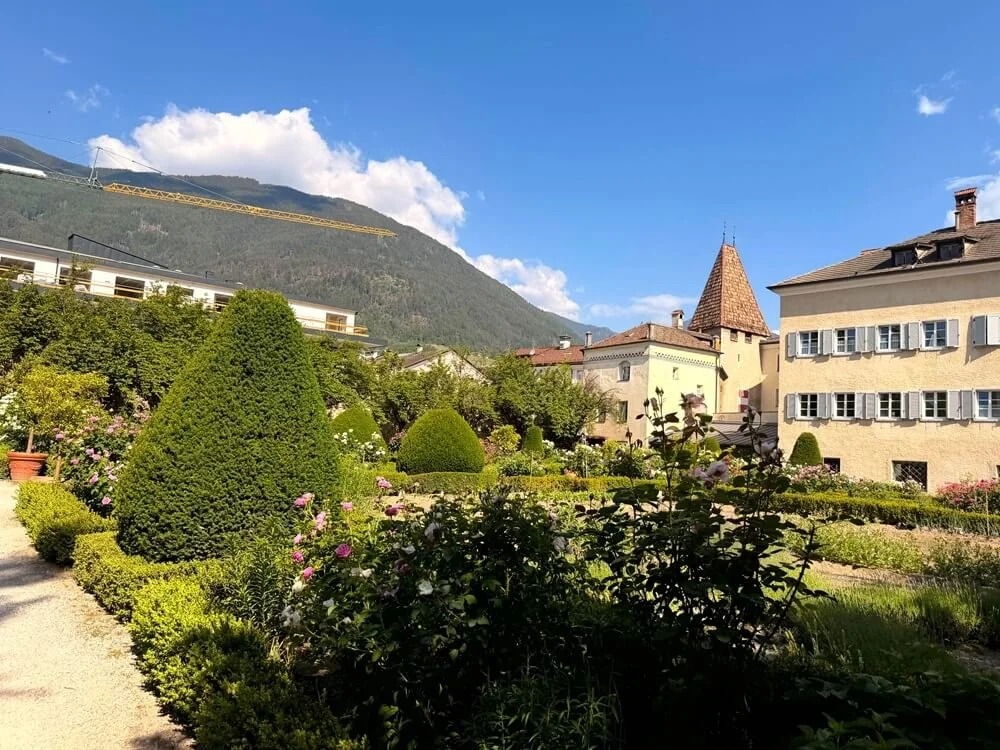
in gorgeous brixen
Brixen may seem a bit far from where everything is happening and in my opinion that’s a blessing — because you don’t get the crazy crowds and I really found the town charming, quiet with more space to walk around.
You could also take the gondola lift takes you to Mount Plose if you have more time but if not you need to do the Adolf Munkel trail.
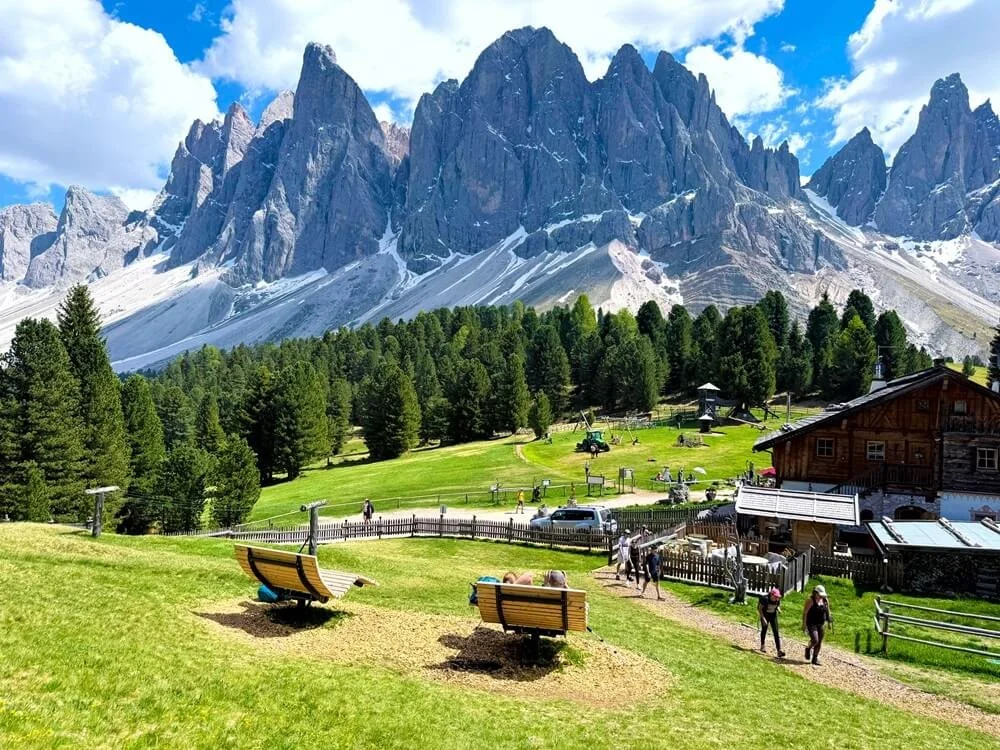
a view of the geiser alm hut towards the end of our hike
I really loved this hike because there was no cable car which means less people to wrestle with and more wooded shaded areas without dying under the sun.
It is located in Val di Funes (Villnöss Valley) and belongs to the Odle Group, which means jaw dropping scenery, varied paths and has one of the best rifugios in the world.
It's roughly 9 km, with about 440 metres of elevation gain, and it kinda takes the whole day because you stop at Geisler Alm to have the best stops ever for lunch!
There’s a meadow, playground and lounge chairs — and it is right at the end which makes you look forward to do this hike.
After you are done with Geiseralm, you might as well check out Val Di Funes. It's most famous for two historic Baroque churches set against the Geisler peaks. It doesn’t take long as well. You can also see Santa Magdalena — I saw people doing this after the hike depending on how much energy you have.
Where to stay in Brixen:
Adler Historic Guesthouse (luxury)
Soley Suites (mid-range)
Gasthof Goldenes Lamm (budget)
Brixen Youth Hostel (budget)
Day 5: Head to Cortina d'Ampezzo
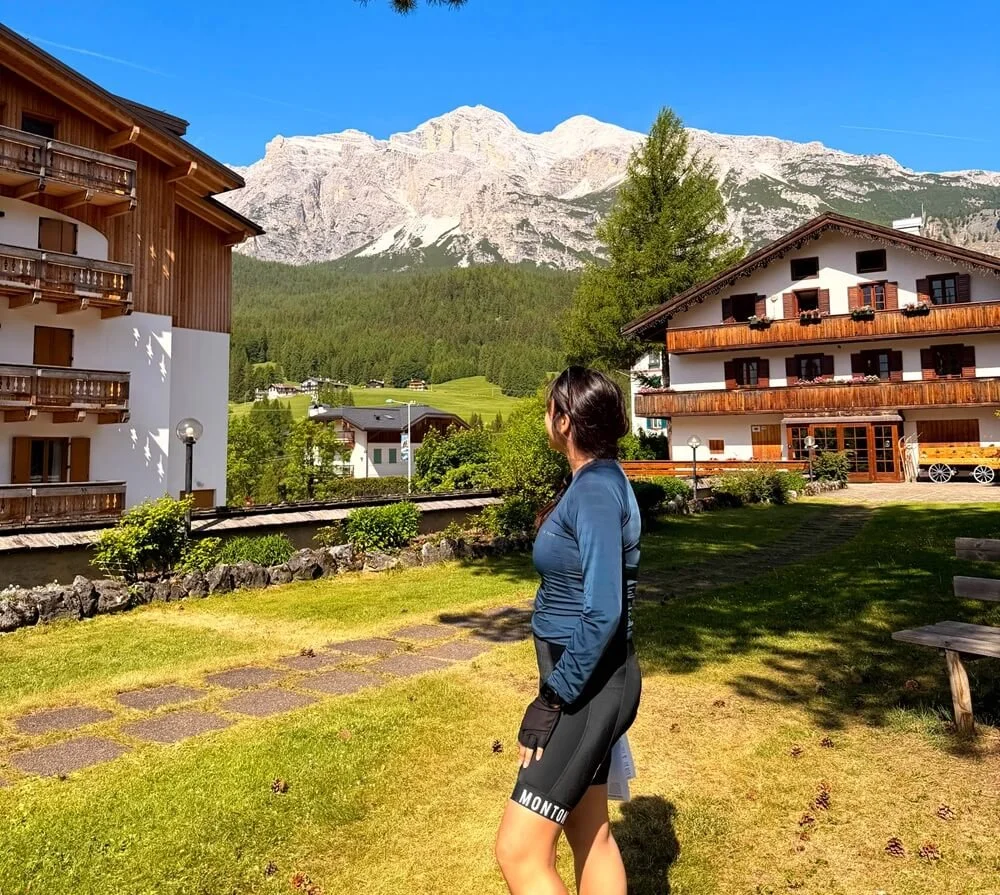
staying in hotel menardi in cortina d’ampezzo
You can end your day here and head back from Brixen or head towards Austria, Munich or Verona (depending where you need to go) but if you want to see more of the Dolomites, you can head towards the other side like Cortina d’Ampezzo.
This is a travel day as much as anything else, so don't over-plan it. You can drive from Cortina d’Ampezzo or you can also reach Dobbiaco from Bressanone (Brixen) using a simple bus and train combo. Take bus B400 from Bressanone to Bruneck, then change onto the regional train for a 30-minute ride to Dobbiaco.
I did this to head towards that direction. The rest of the day was just chilling and exploring these towns and the hotel we stayed at.
Where to stay in Cortina d’Ampezzo
Grand Hotel Savoia (Luxury)
Hotel Menardi (mid-range)
Hotel Columbia and spa (mid-range)
Hotel Nigritella (budget)
Day 6: Tre Cime di Lavaredo and Cadini di Misurina
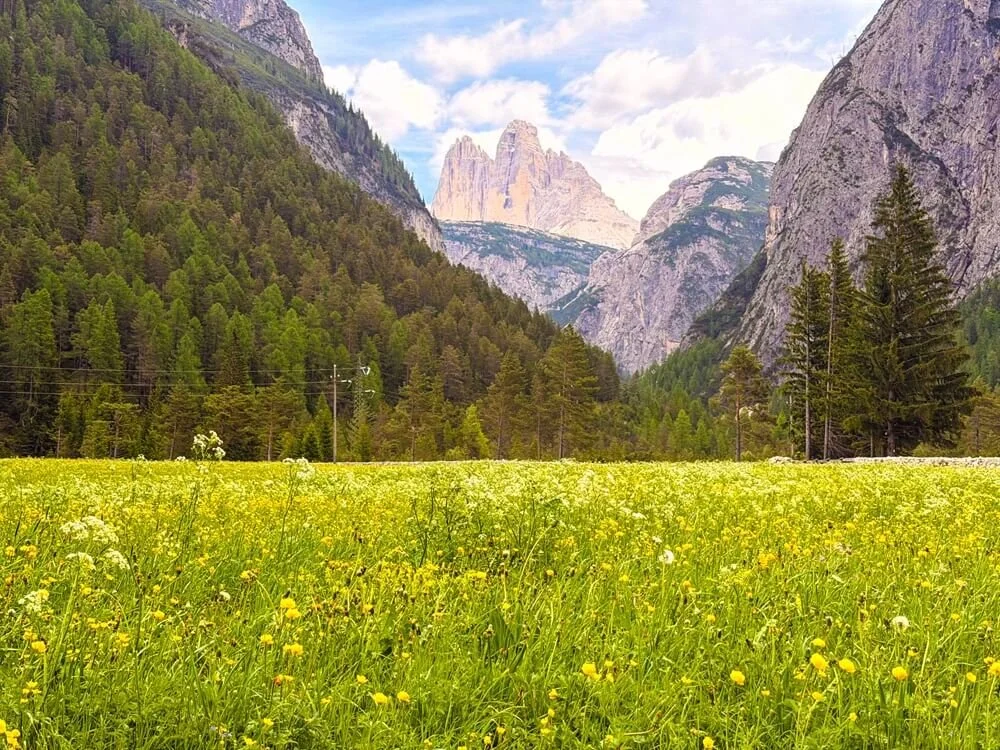
In Cortina d’Ampezzo public bus and transports are sometimes limited, if you have a car it is ofcourse much better.
But if you must, the Dolomitibus service provides direct services from Cortina d’Ampezzo and Auronzo di Cadore, with convenient connections from Calalzo di Cadore, where the nearest train station is located.
The bus arrives at Rifugio Auronzo, ideal starting point for the Tre Cime loop tour. It is recommended to always check the updated timetables, as they can vary depending on the period and availability.
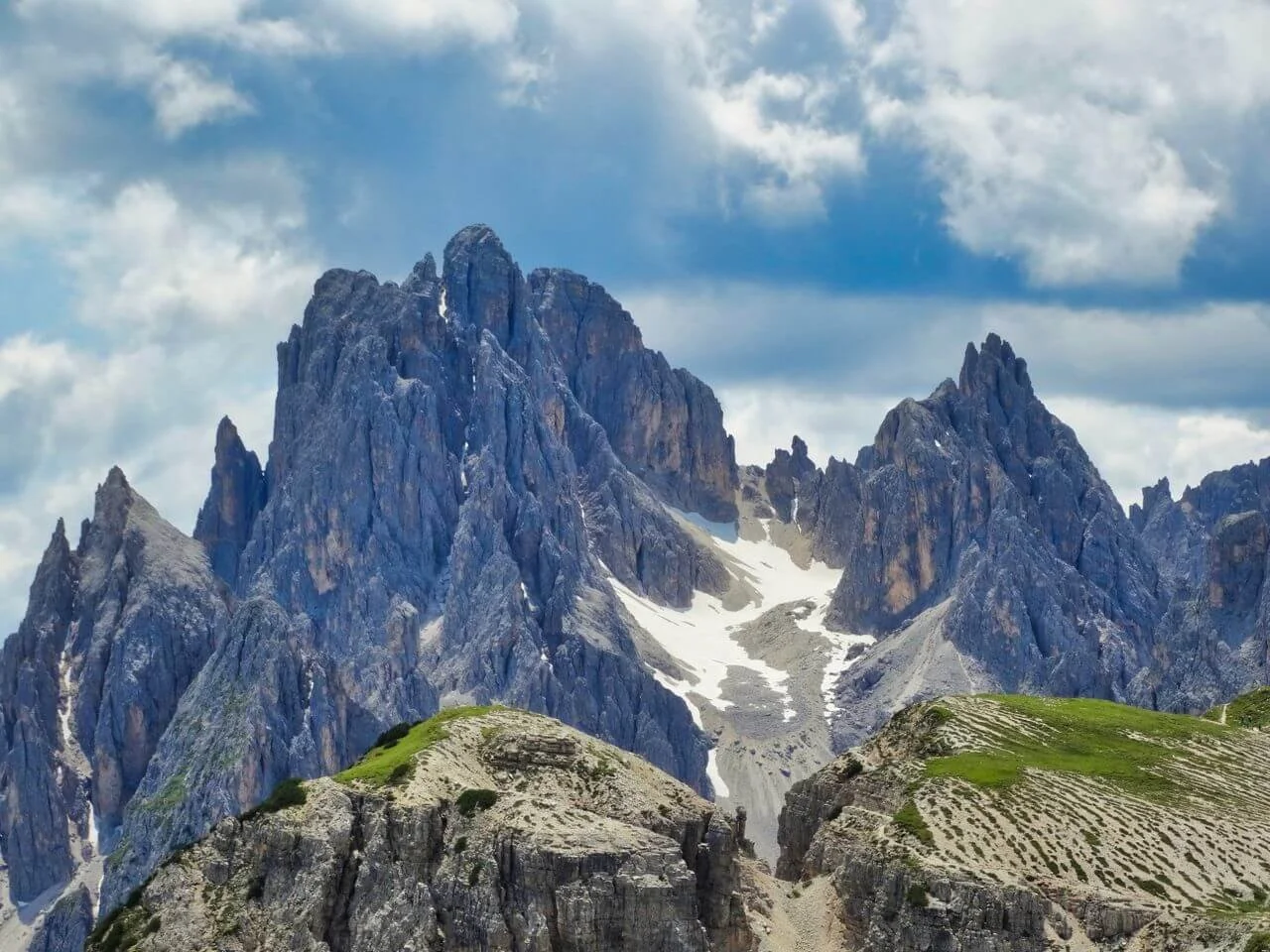
cadini di misuina
The hike around Tre Cime is about 10 km, roughly 6 miles, and from the same trailhead at Rifugio Auronzo, the Cadini di Misurina viewpoint is only a 30-40 minute detour away — worth doing both in one day if you're already out there.
A few logistics worth knowing before you go: parking at Rifugio Auronzo needs to be booked and paid online in advance, and runs €40 per car for the day. If you'd rather skip the toll road entirely, shuttle buses run from Cortina, Dobbiaco and Misurina to Rifugio Auronzo for about €15 return.
I would suggest going early as both for parking and to beat the crowds, this is one of the most photographed spots in the Dolomites for a reason, and it fills up.
Where to stay in Cortina d’Ampezzo
Grand Hotel Savoia (Luxury)
Hotel Menardi (mid-range)
Hotel Columbia and spa (mid-range)
Hotel Nigritella (budget)
Day 7: Slow Morning, Then Head Out
I would use the last day as a buffer to chill and travel back to wherever you decide to come from.
You can end in Venice which is what a lot of people do and fly out from there.
And if you are interested in a more adventurous option, you could cycle from the Dolomites to Venice for 7 days which is what I did (it was fun, and I saw a completely different side of Italy like their grappa towns with prosecco, tiramisu towns and cherry farms).
Why I split it this way instead of doing Cortina first
Val Gardena and the Cortina side of the Dolomites are far enough apart that bouncing between them mid-trip wastes half a day on driving. Doing all of Val Gardena first, then moving to Cortina, means you only make that drive once.
Season plays into it too. The cable cars near Ortisei tend to open earlier in spring, while the ones on the Cortina side, including the one up to Tre Cime, open later since they sit higher up. Same story in autumn, it gets cold up there faster than it does around Val Gardena. So doing Val Gardena first isn't just about the drive, it's also about hitting each side when it's actually accessible.
If you're short on time and have to cut something, Days 6-7 are the ones to drop, everything in Days 1-4 works as a standalone 3-5 day trip on its own.
Also read:
Cycling In Italy: From Dolomites to Venice in 7 Days (Self-Guided)
Best eSIM for Italy: I Tested Sim Local — Here's What I Found
Like this story? PIN IT!