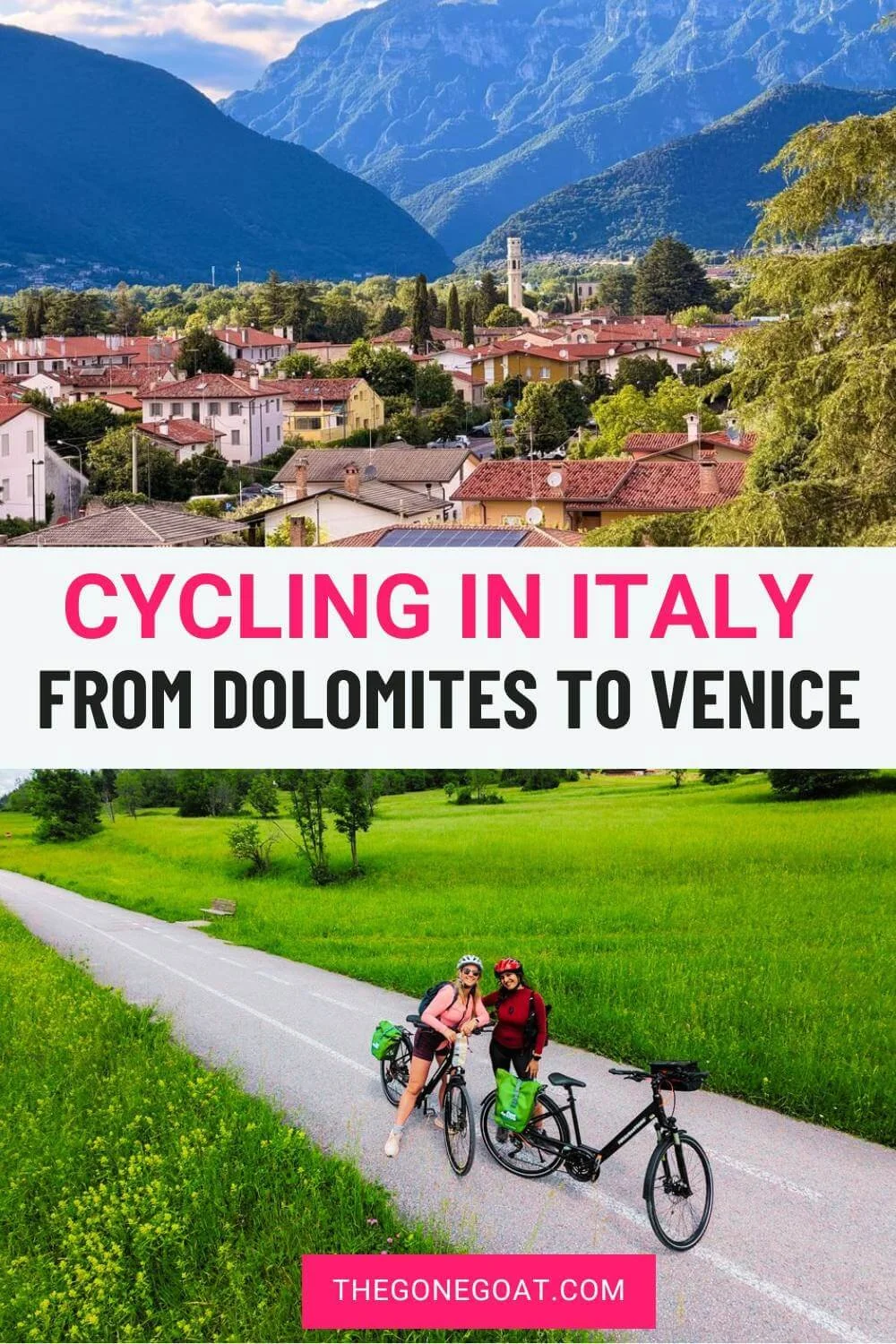
Cycling In Italy: From Dolomites to Venice in 7 Days (Self-Guided)
/This Spring, I went cycling in Italy from Dolomites to Venice. It was such a highlight of my trip that I wonder why most people are not doing it?
Sure, you could go hiking and look at Tre Cime peaks but what if I told you that you could get much better views, dedicated cycling lanes and pizza stops at unlikely places that will make cycling in the Dolomites the highlight of your trip.
You can forget about the experiences like walking to a spot with “apertifs, tiramisu and pasta” when all of this taste 1000x better when you are on a cycling trip in Italy.
I cycled from the Dolomites to Venice over 7 days with Sackmann Fahrradreisen, a German cycling tour operator that's been running self-guided bike trips across Europe.
They handled the logistics such as route, GPS navigation, luggage transfers and hotel bookings.
I also just want to add this isn’t just the "best of Italy" route. It's specific, point-to-point, and it changes almost daily.
We had alpine peaks one morning, prosecco hills by lunch, lagoon water by the end of the week. If you're looking for a cycling route through Italy, this is my suggested itinerary.
Also read: My Real Dolomites Itinerary: 5 to 7 Days (What I Loved About It)
Why Cycle from the Dolomites to Venice
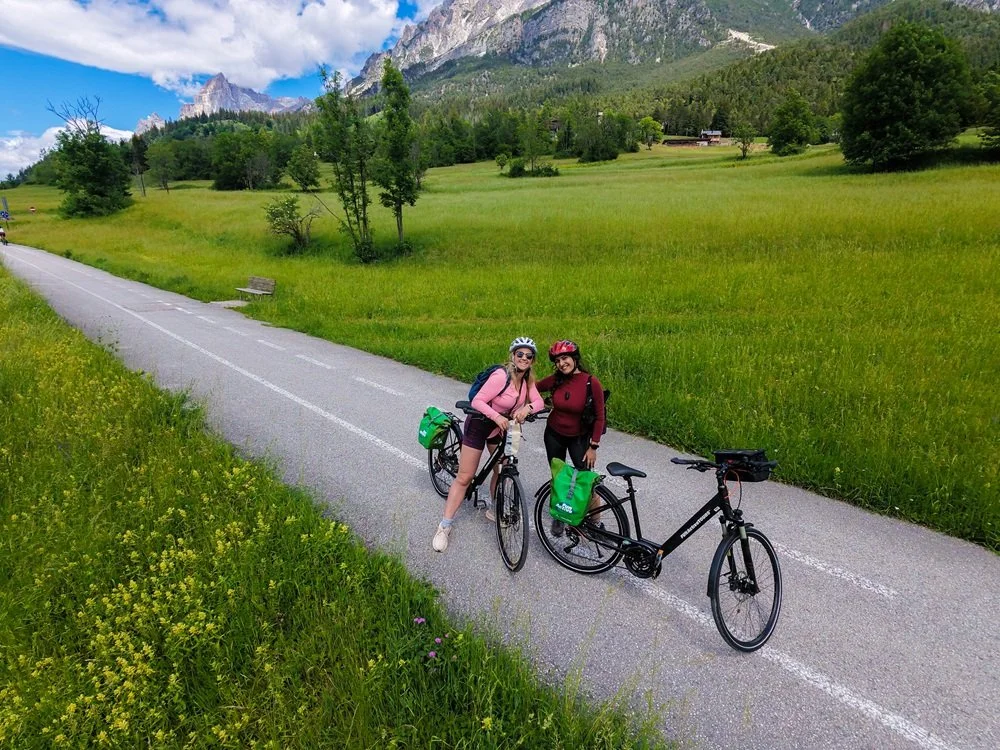
a snapshot of why you should go cycling in italy from dolomites to venice
Most cycling routes in Italy do not pass through a variety of terrain: I mean you are in the South Tyrol region straddling Germany and Italy and the next thing you know you are cycling through typical Italian villages.
The cycling trip starts in the Dolomites visiting the UNESCO World Heritage limestone peaks, stopping in towns like Treviso (the birthplace of Tiramisu) and you end in Venice.
In between, you pass through Cortina d'Ampezzo, the Veneto's prosecco country, and a string of towns most travelers never make time for.
What makes it worth doing on a bike rather than by train or car is the gradient of the experience. I really love how you get to slowly ride through vineyards, meadows and stop for cherries and even a prosecco!
By the time you hit the Veneto flatlands, the climbing is behind you get to leisurely cycle across canals and architectural buildings that makes you wonder what’s the history behind these places?!
It's also, refreshingly, not overrun. The Dolomites get plenty of hikers and skiers, and Venice gets entirely too many tourists, but the corridor connecting them like Belluno, Feltre, Bassano del Grappa, Asolo, Treviso sees a fraction of the foot traffic.
You get small-town Italy without trying very hard to find it.
Also read: The Dolomites I loved: 10 Best Things To Do
The Route: Cycling Toblach to Venice in 7 Days
The ride follows the old Dolomites Railway line, a historic rail route that once connected the mountains to the coast and has since been converted into a long-distance cycle path.
You're essentially tracing train tracks that stopped running decades ago, which gives the whole route a strange, satisfying sense of purpose like you're finishing a journey someone else started.
The Accommodation
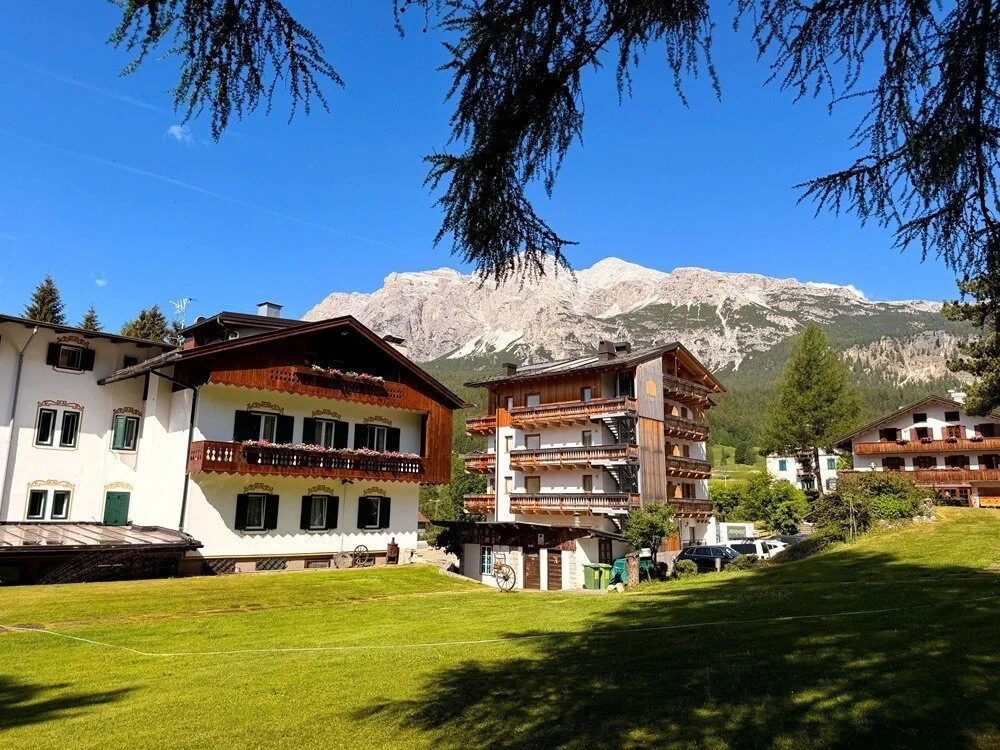
our hotel when cycling in italy, in cortiza d’ampezzo
We stayed in some of the best places to stay in the Dolomites and the Veneto region. The breakfast was amazing, they were 3 to 4 star hotels with hot showers and comfortable beds.
The highlight was also our hotel on the first day in Cortina d’Ampezzo. It had some of the best garden views of the mountains with a lot of time to enjoy the morning or late afternoon sunrays.
Some of the best hotel stays when cycling in Italy are here. We have listed it below:
Also read: Where To Stay in The Dolomites: Places & Hotels I Loved!
Hotel Mernardi (Cortina d’Ampezzo)
Albergo Capello (Belluno)
Hotel Doriguzzi (Feltre)
Bonotto Hotel Palladio (Bassano del Grappa)
Hotel Continental (Treviso)
Hotel Alexander (Mestre, Venice)
Day 1–2: Toblach to Cortina d'Ampezzo (35km)
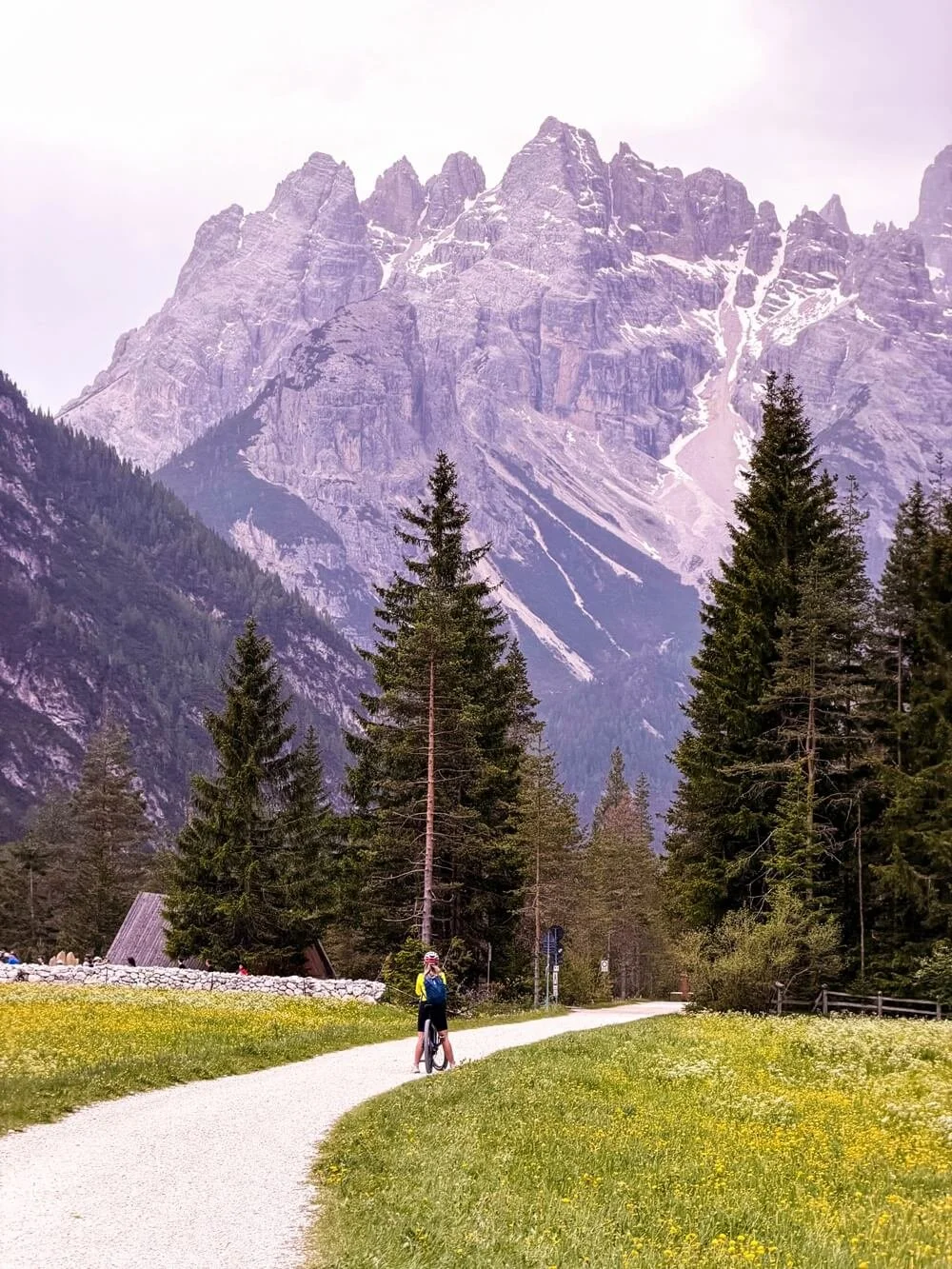
starting our cycling in italy with a view of the dolomites
The route starts in Toblach (Dobbiaco), deep in the northeastern Dolomites, and immediately puts you underneath the Tre Cime di Lavaredo — three jagged limestone towers that are arguably the most photographed peaks in Italy for good reason.
From there, you ride through the Höhlenstein valley into Cortina d'Ampezzo, the Olympic town which I had no idea about.
A quick caveat: this stretch follows the old railway trail, and "converted rail path" sounds smoother than it actually is. Sections were genuinely rocky like loose gravel and gnarly terrain.
Due to a mix-up with our bike booking, we ended up on e-bikes for this first day instead of standard road bikes, and it turned out to be a complete blessing in disguise.
The extra power took the edge off the rougher sections and meant we could actually look up at the Tre Cime instead of manually adjusting the handlebars.
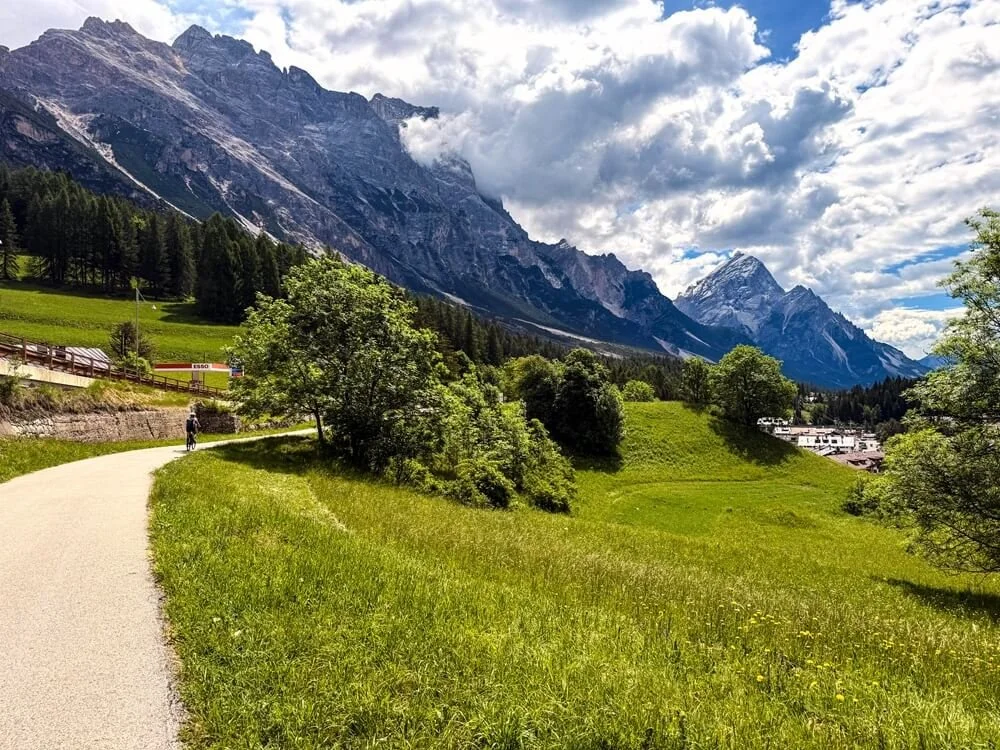
how glorious are these cycling lanes and mountain views? perks of cycling in italy
But this was our first taste of viewing the Dolomites in its full spectacle, we rode towards the cone-shaped mountain with cows by the meadows, and it felt like a dream!
I couldn’t believe that fact that this route is not that popular because I have cycled in some Eurovelo routes and I am genuinely impressed by the cycling roads and infrastructure!
Day 3: Cortina d'Ampezzo to Belluno (75km)
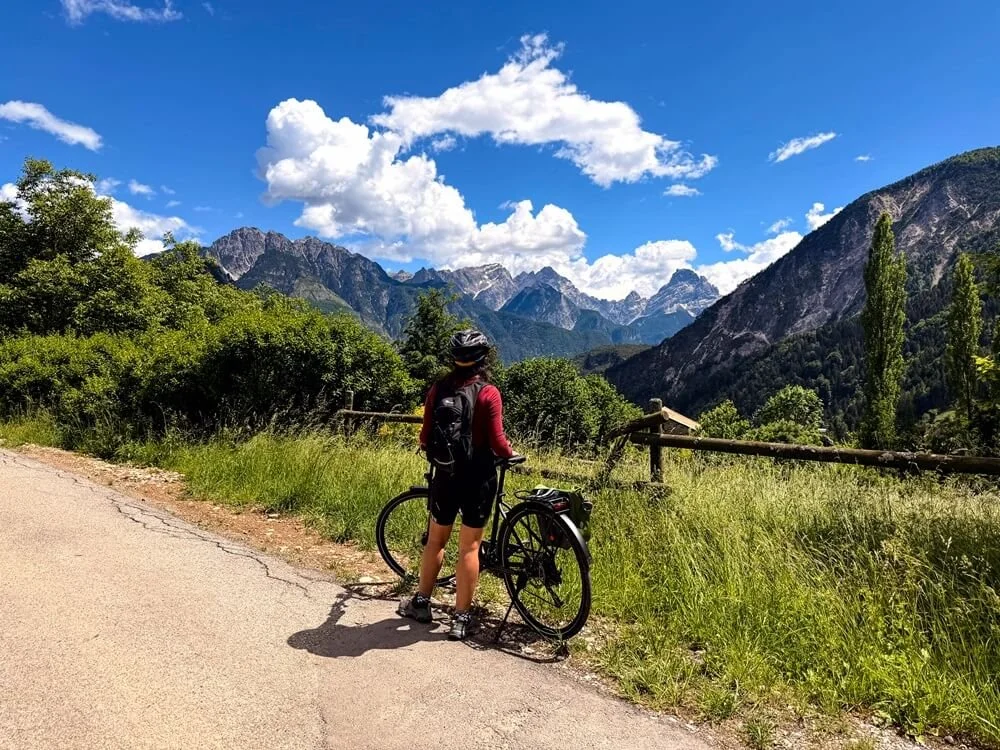
can’t stop looking at the mountains here
This was the big one like 75km long and by far the longest day in the saddle. We got a proper taste of cycling long distance and all the drama that comes with cycling like fallen off chains, kind Italians helping you out and views so insane you had to stop every now and then!
You drop out of Cortina and into Pieve di Cadore, birthplace of the painter Titian, before continuing down through forested valleys into Belluno, a really nice town wedged between the Dolomites and the Piave river.
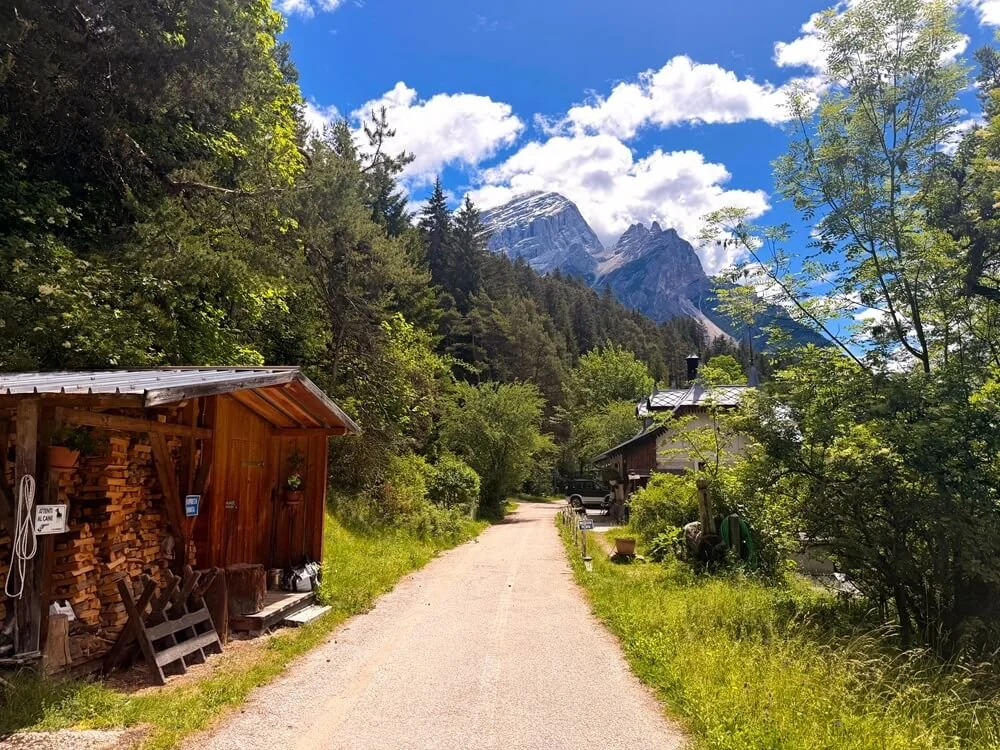
when heading towards belluno
You could also see sunbeds facing the mountains and it does feel like a proper Italian summer!
We met other cyclists people from Germany, Ireland and the US (mostly older folks) doing this bike ride and it was such a nice social ride.
To break up the ride, we stopped in this town called Tai Di Cadore, a small town in the Dolomites province of Italy. There was a bike shop called Officina 33 that helped us fixed some bike kinks for free — such a kind owner.
But we had one of the best baked goods at Bakery Marcon Si — the pistachio crossiant here is to die for. Just all the goodies and good food here is simply too amazing!
The final stretch into Belluno, conversation had mostly stopped in favour of just turning the pedals. But the views carried it. You spend the day descending out of proper alpine territory, and every switchback opens up a slightly different version of the same jaw-dropping scenery.
We refuelled with entire saucepans of pasta in Belluno in this restaurant called La Trappola. I also must tell you that in this town — it was the starting point for the Giro D’Italia women’s finals. We couldn’t make it in time to watch the kick-offs but we were genuinely awed how the town seems to be merry and bring everyone together.
Day 4: Belluno to Feltre (40km)
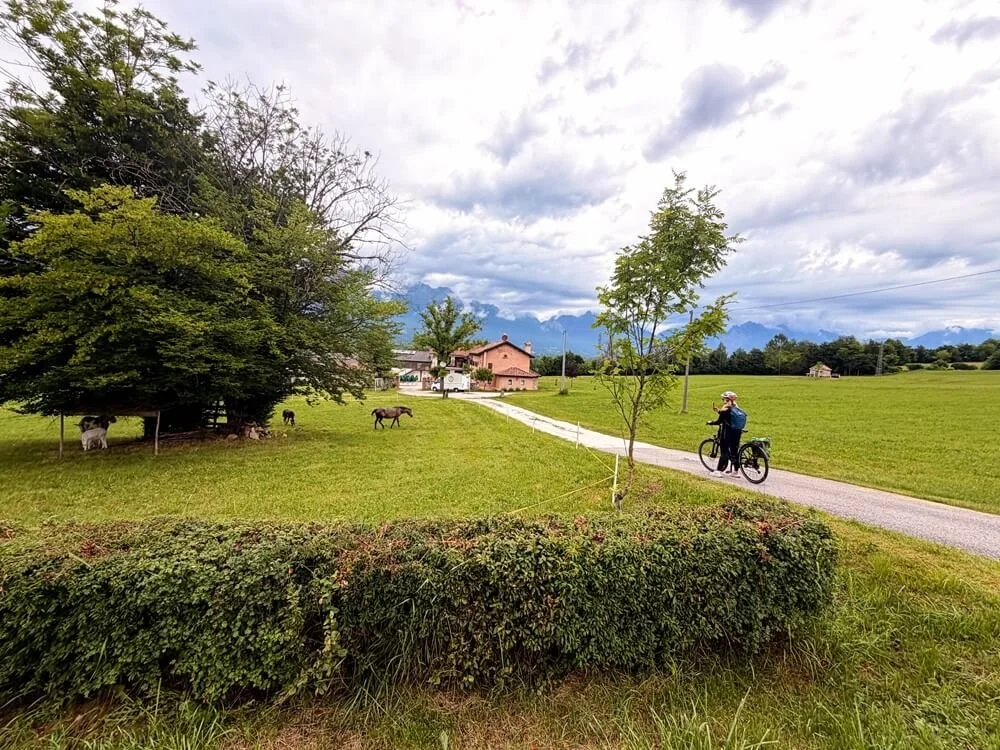
cycling from belluno to feltre in italy
After yesterday’s sore ride, we were thanking our lucky stars that today was a shorter gentler ride that followed tree-lined spots and hilly landscapes until we reached the end of the day in Feltre.
The day was slightly overcast and it felt like we were seeing a different side of Italy with real countryside roads.
The towns were surprisingly empty and I am told that because it is not the official season yet, you’d expect most places to be closed or open a bit later in the day. We loved to cycle past stone houses, different pets that people had, and ofcourse a gelato stop.
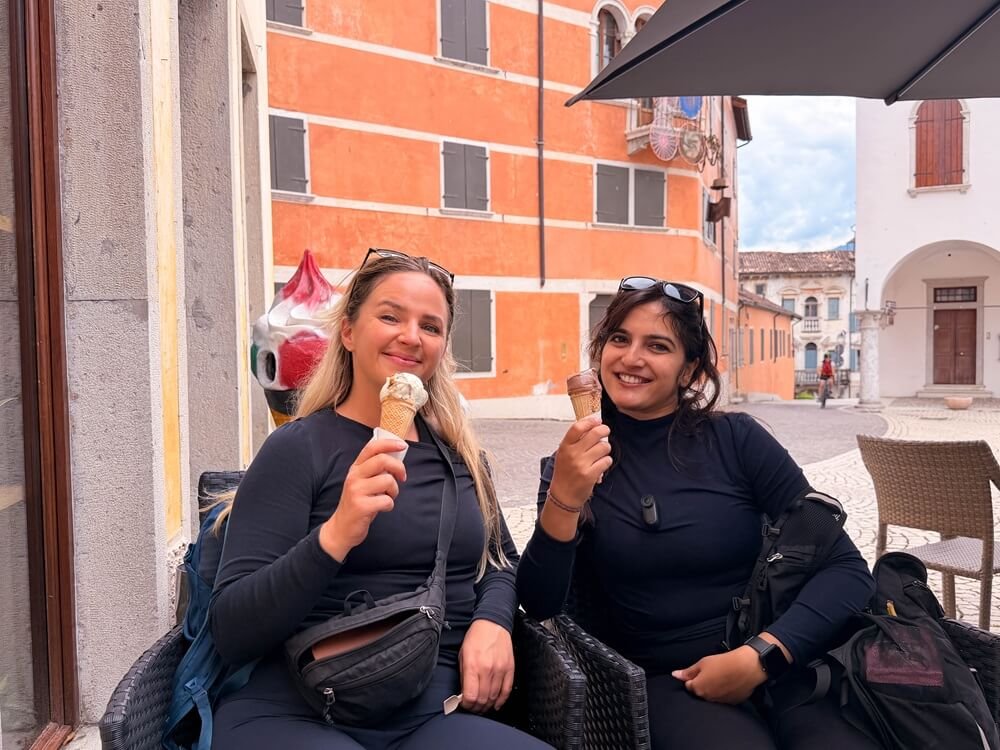
gelato stop
If you want to people watch and have gelato for breakfast, I highly recommend stopping in Chocolat snc di Viel Fabio.
It was a chill day and with gentler slopes heading to Belluno means more stops.
Once we reached Feltre we settled in to have more food, this was a walled town in the Veneto region of northern Italy.
Day 5: Feltre to Bassano del Grappa (55km)
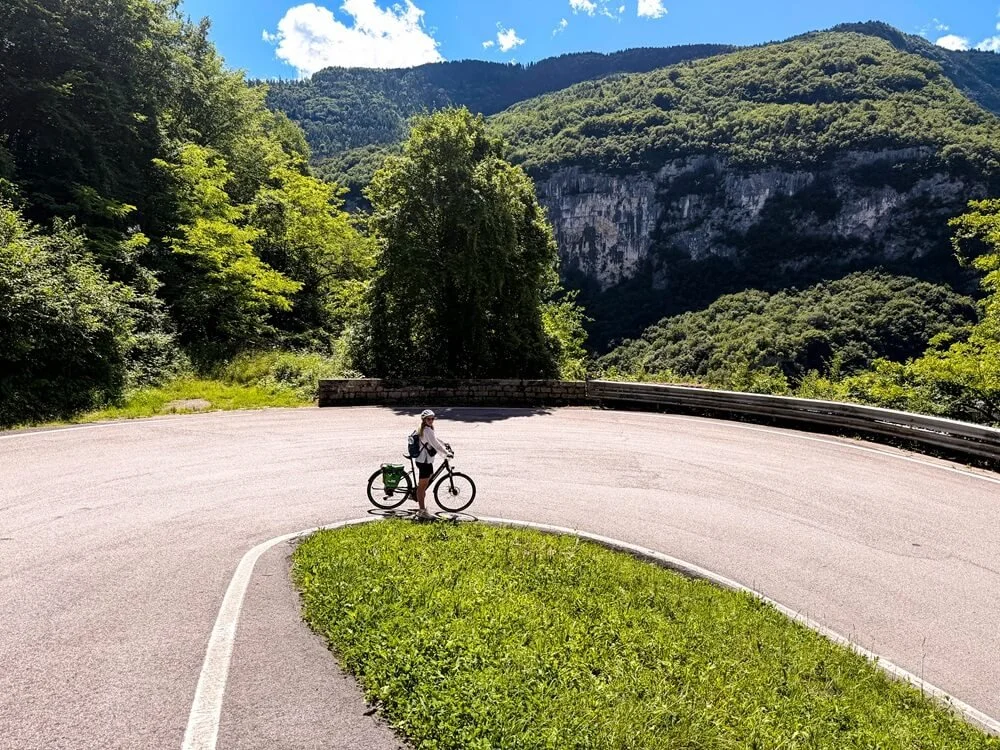
switchback downhill route all the way to bassano del grappa - glorious roads
A glorious day to be out riding — let’s put it this way. We picked berries from trees, cycled past rolling hills on the edges of prosecco country.
The terrain keeps mellowing here, and you start riding through the edges of prosecco country.
We had fresh orange juice, gorgeous blue skies and passed through a town called Primolana which looked very Austrian like with their stone towers — the town apparently features Great War military sites.
We even crossed multiple hanging bridges and a narrow cycling bridge alongside the river that opens up to the valley. Everything screamed gorgeousness — the green hills, blue skies and perfect crisp 21 degree weather.
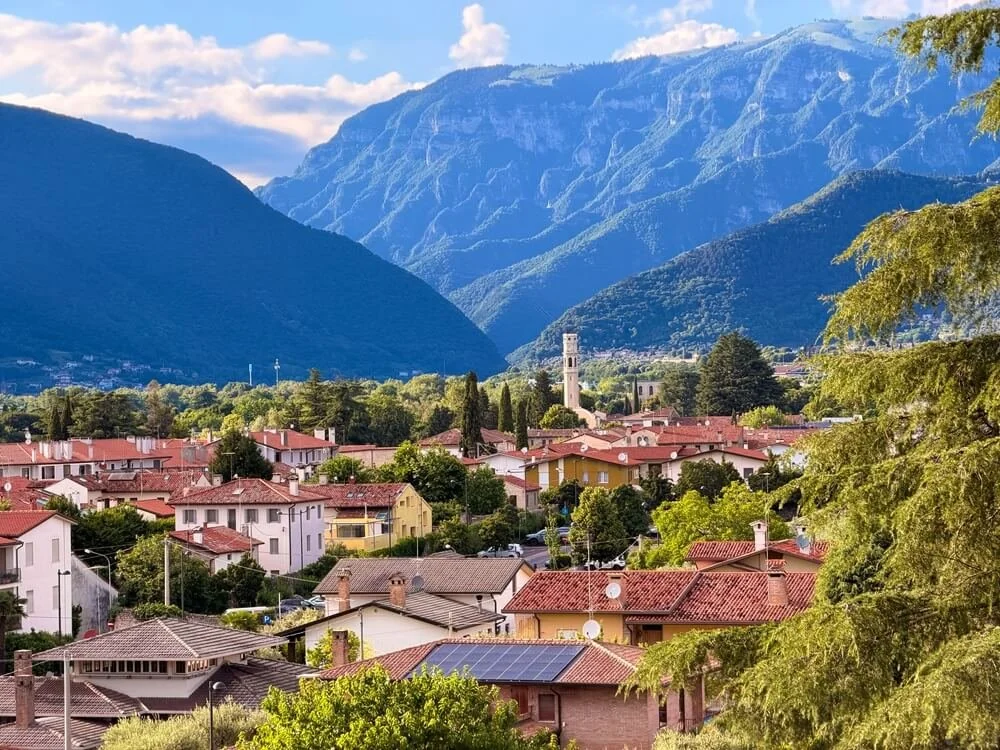
a view of the bassano del grappa town
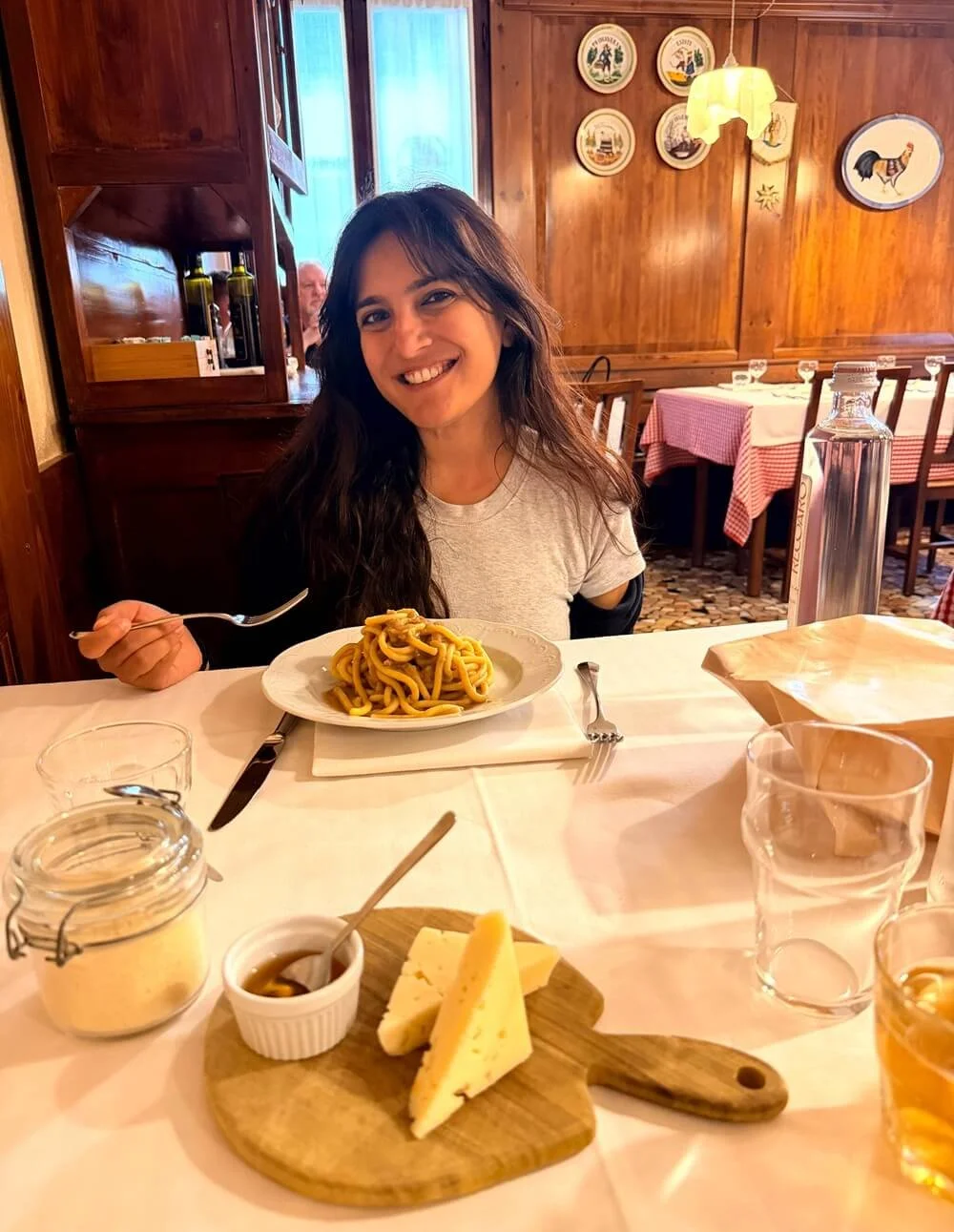
having one of the wheat pasta in italy
We loved the town that we arrived in simply because it is known for its world class grappa, a grape-based brandy from Italy.
No one told me how gorgeous their town would look — there was a wooden bridge, cobblestone streets and mini tiramisus that we gorged on.
We also tried their Bigoli de Bassan, a signature thick, spaghetti-like wheat or whole-wheat pasta of the region. To be honest, I wasn’t the biggest fan of this spaghetti and I had it with a rich fish sauce made from onions, salted anchovies, or sardines. Yes, it was fishy and so salty but you should try it for the fun of it
Day 6: Bassano del Grappa to Treviso (via Asolo) (55km)
We had expected a long day today but more than just a long day — the architecture is vastly different. Heading towards Venice means you will notice Venetian-gothic elements in a lot of older mansions.
While cycling here, we made a short detour up to Asolo — nicknamed the "city of a hundred horizons" for its hilltop views over the Veneto plains before continuing into Treviso.
It was a nice town to see faded frescoes and wonder what did poets or artists see in these places.
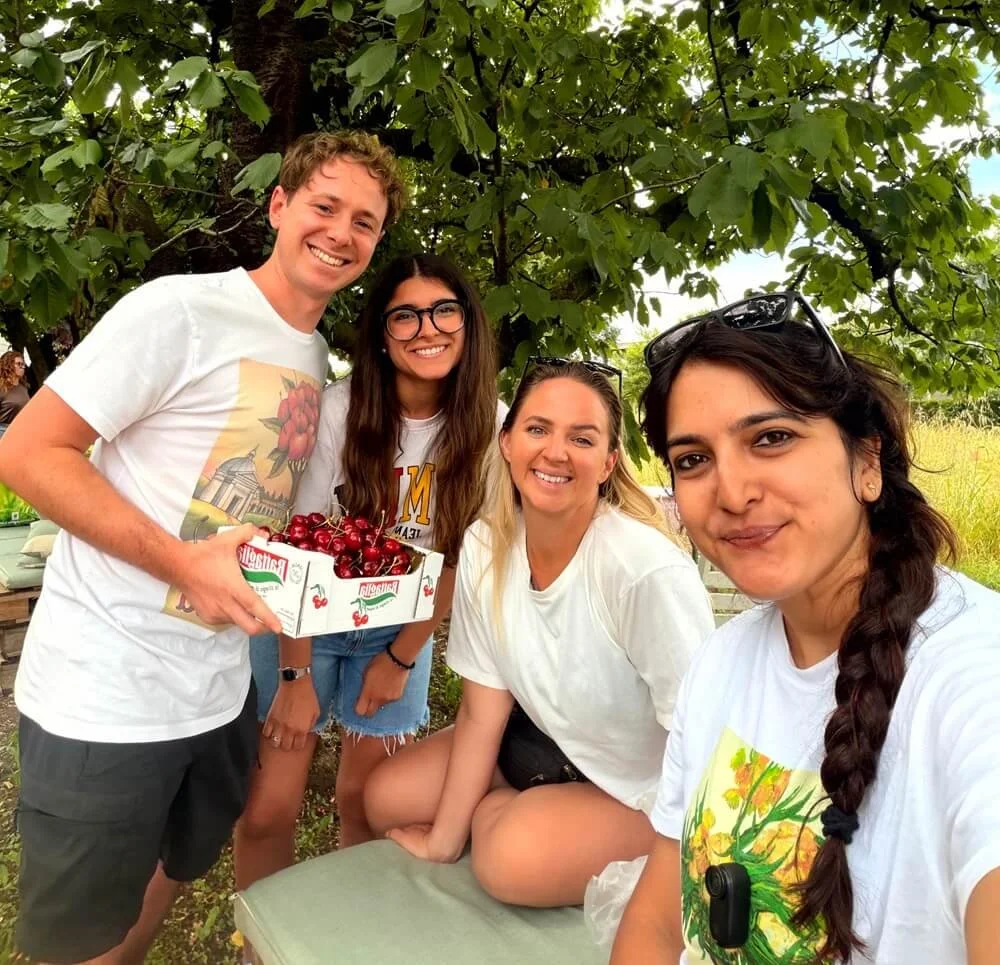
our cherry stop in treviso - you have to stop here when visiting battaglia cilegia di maser
We also passed through a cherry farm called Battaglia Ciliegia di Maser which had some of the largest cherries we have seen. For 8 euros a kilo, it was amazingly well-priced. You could sit on their outdoor deck and munch on cherries — a much needed breather from this long ride.
The terrain was sometimes long and relentless with a tad more traffic as we headed into these towns. But all this meant more breaks, so we stopped for sandwiches and coffee at Montebelluna town.
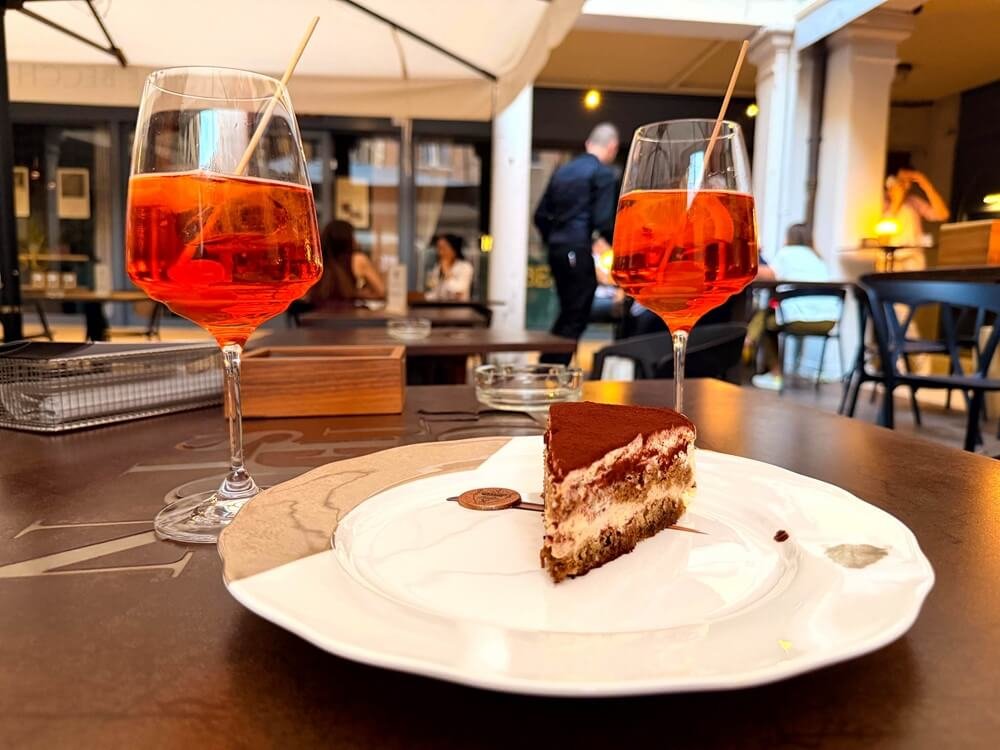
here is where tiramisu was founded tiramisu le beccherie
It was also exciting to make our way to Treviso simply because Treviso is sometimes called "little Venice" for its network of canals and more than that it is also the birthplace of tiramisu.
Our Italian foodie dream trip came true which means reaching Treviso and having the best Italian pasta at Etto Treviso followed by tiramisu and aperol spritz at Tiramisù Le Beccherie — it is the original tiramisu restaurant from 1972.
We were famished and tired and couldn’t believe the next day would be our last day cycling in Italy.
Day 7: Treviso to Venice (45km)
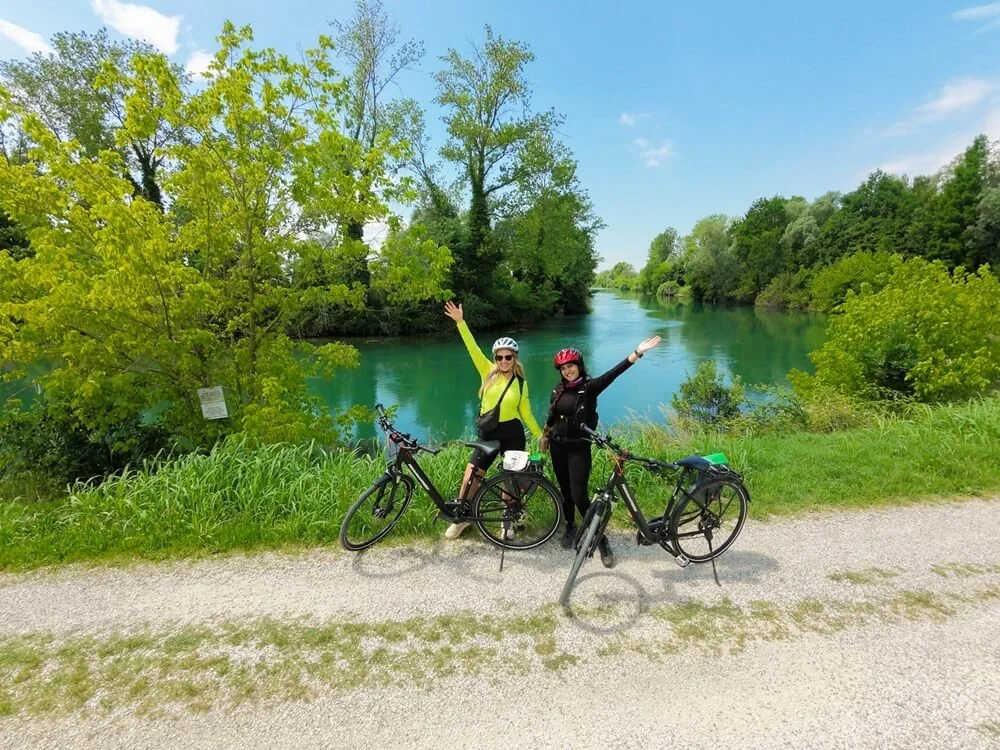
cycling from treviso to venice
The final stretch follows the Sile River almost the entire way, a flat, easy ride through wetlands and small villages that gives your legs a break before the big finish.
We took as many stops as we could and we came across many shady spots which was a welcome change from the other days.
Ducks by the river and multiple bridges also meant a lot of photo stops!
We also regrouped with other cyclists we met along the way and had a leisurely lunch at this pizza spot which had amazingly good food. The place Pizzeria Pino S.N.C. di Gorghetto Mara e Ivan is where you should go for thin and crispy pizzas.
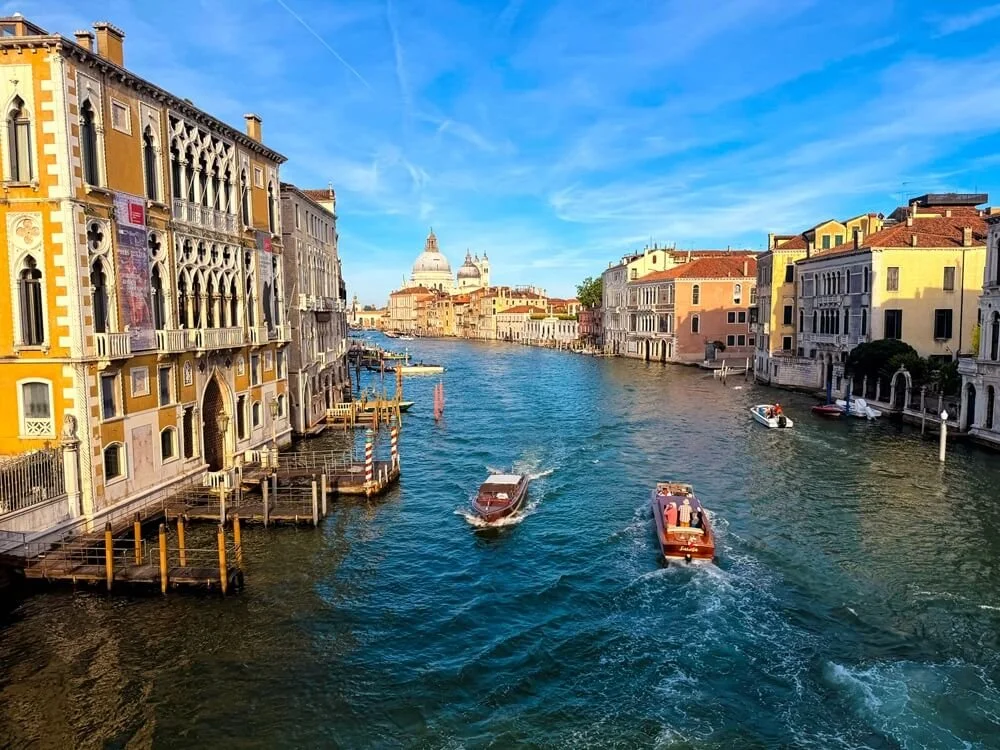
finally reaching venice after cycling all those kms
It felt long and endless after reaching Venice — just meant more traffic light stops and cycling on the edges of the Venetian lagoon before finally reaching Venice.
Our final stop was at Mestre, the town that connects to Venice. It is much better to stay here than deal with baggage in Venice so this was a fitting stop before spending the next few days exploring Venice.
It felt like we saw it all in Venice: the alpine, countryside, river and finally Venetian lagoons.
What Makes This Route So Stunning
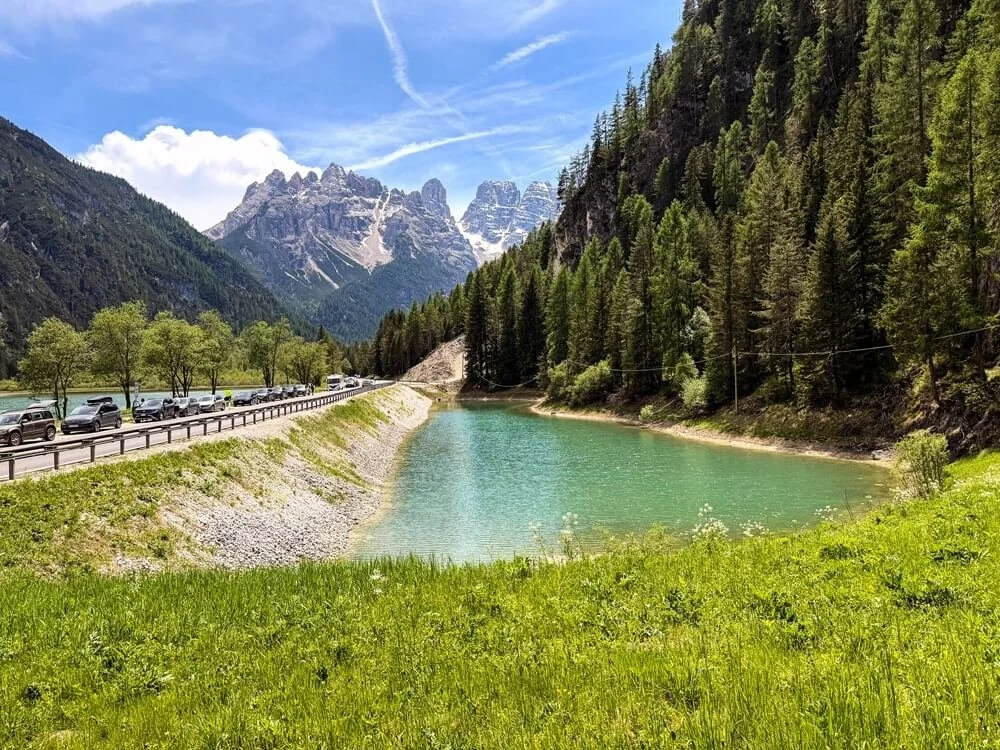
how gorgeous are these views?
I will say and repeat it: it's the contrast that does it. Within seven days you go from limestone peaks rising 2,857 metres into the sky, to gentle vineyard hills, to a city with no roads at all.
There are only very few cycling routes in Europe that compress that much landscape variety into a single week. I can’t think of any to be honest.
I mean just the Tre Cime backdrop on day one alone is worth the trip and all the mountaisn you see!
Then there's the slow unfurling of the Veneto countryside through Bassano and Asolo, all soft hills and prosecco vineyards, which feels like a different country compared to where you started.
And finally, arriving in Venice by bike rather than by train or vaporetto is an accomplishment on its own!
There's also something to be said for riding a historic rail corridor.
Practical Tips for Cycling the Dolomites to Venice
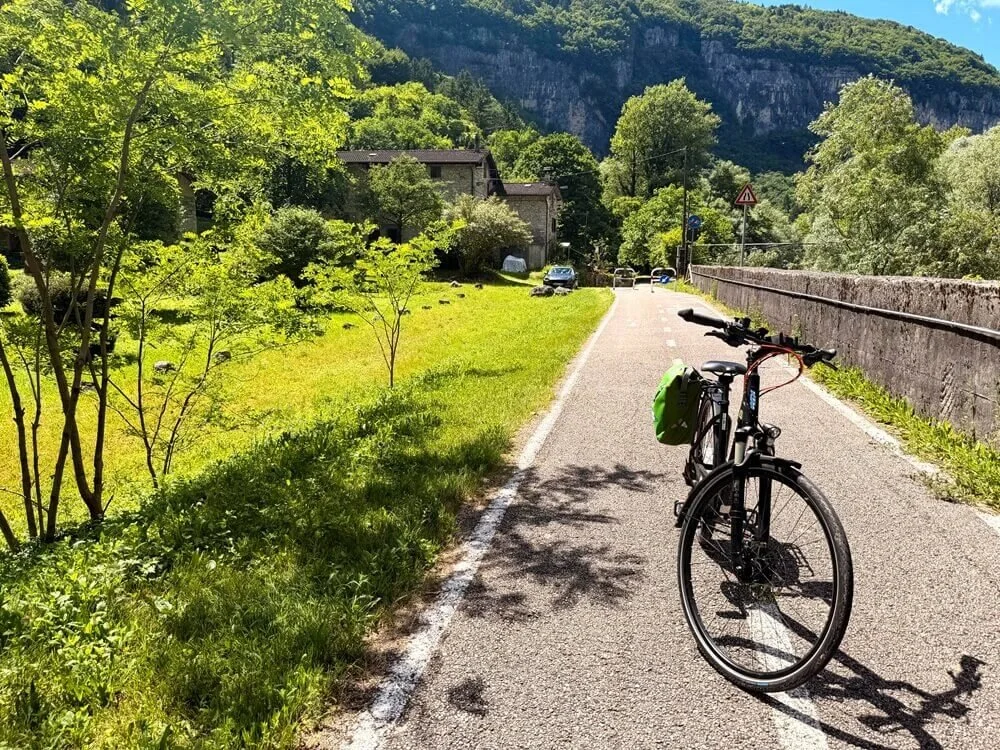
what you need to know before cycling in italy
Consider an thicker tyres for the Toblach–Cortina leg. The old railway trail sections can be rough with gravel, loose stones, uneven surfaces and a bike with thicker tyres takes the sting out of it without taking away the experience.
Pace yourself for day 3. The 75km Cortina–Belluno stretch is the longest of the trip and honestly made me very exhausted (perhaps the toughest one!)
Pack for temperature swings. Mornings in the Dolomites can be genuinely cold even in summer, while the Veneto plains later in the route run warm. So just dress in layers
Let the bike company (Sackmann) handle the logistics. Self-guided doesn't mean unsupported as you get GPS navigation, daily route notes, luggage transfers between hotels, and pre-booked accommodation meant the only real decision each day was where to stop for pizza.
Build in slow time for the towns. It's tempting to treat this as point-to-point cycling and just chase kilometres, but Asolo, Bassano, and Treviso all reward more time which also makes evenings or late afternoons perfect. During May, the sun sets only at 9pm so we had plenty of time!
FAQ: Cycling from the Dolomites to Venice
How many days do you need to cycle from the Dolomites to Venice?
7 days is the standard itinerary, covering roughly 250–300km from Toblach to Venice. It's paced to allow for two demanding mountain days early on, followed by progressively easier terrain as you head south.
Is the Dolomites to Venice cycling route suitable for beginners? It's rated as a moderate route overall — the first two days through alpine terrain are the most physically demanding, while the second half through the Veneto plains is flat and easy.
Reasonable fitness helps, but you don't need to be a serious cyclist. You also have the option to choose an e-bike which we saw a lot of older cyclists truly enjoy! It makes the mountain stretch considerably more accessible.
What's the best way to book this route? We rode with Sackmann Fahrradreisen, a German operator specialising in self-guided cycling tours across Europe. They handle route planning, GPS navigation, hotel bookings, and luggage transfer between stops, which makes the logistics genuinely hands-off.
What time of year is best for cycling the Dolomites to Venice?
Late spring through early autumn (May to September) is ideal. Summer gives you the most reliable weather in the mountains, though it's worth checking conditions in early or late season, since Dolomite passes can still be cold outside peak summer.
Where does the route start and end?
The route starts in Toblach (Dobbiaco) in the northeastern Dolomites and ends in Venice, following the path of the historic Dolomites Railway before joining the Sile River into the lagoon.
Is the route well-marked and safe for self-guided cycling?
Yes — the route largely follows dedicated cycle paths and former rail lines, with clear GPS navigation provided by the tour operator. Road sections are minimal, especially once you're through the mountain stretch.
Read more of my Italy posts:
Like this story? PIN IT!