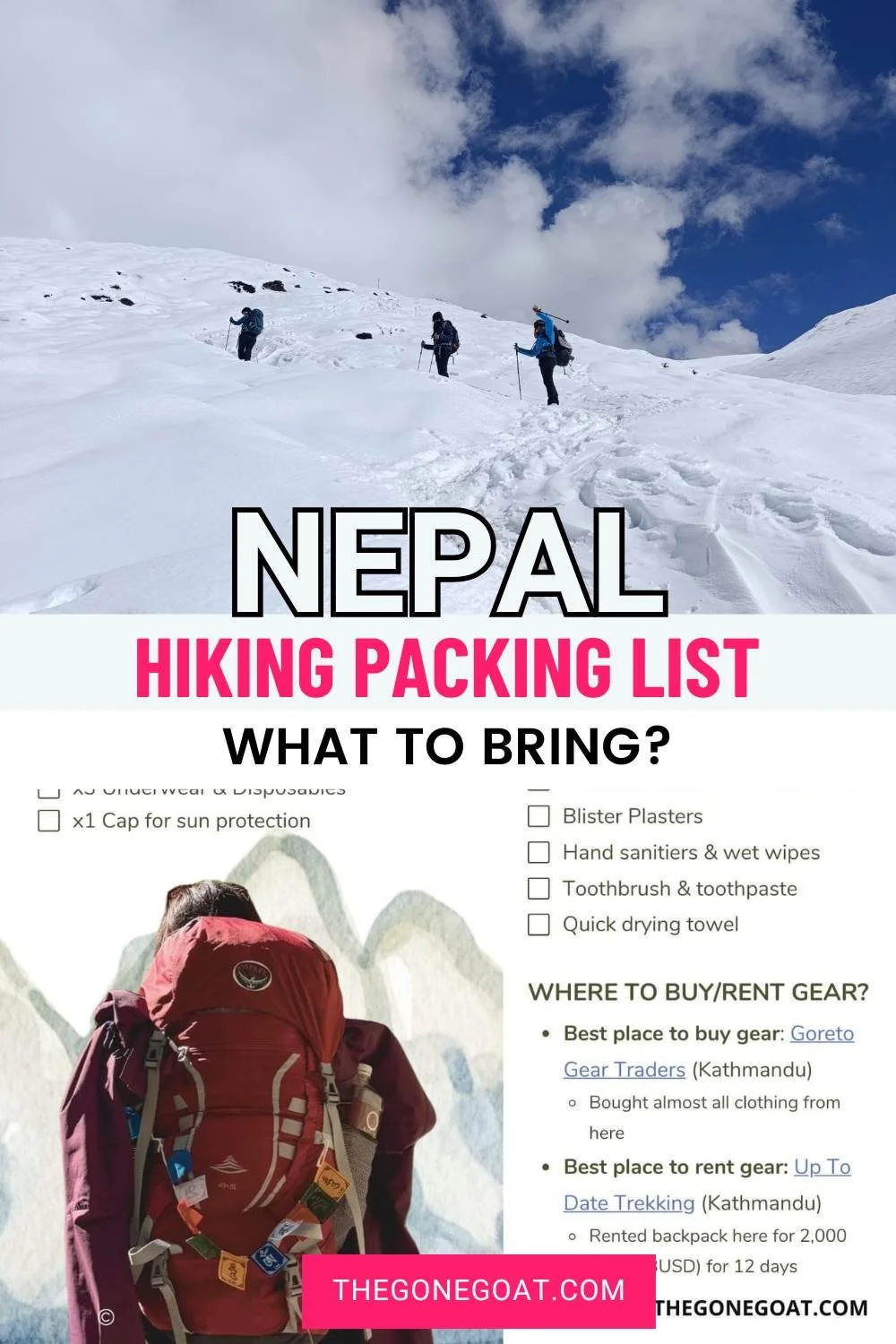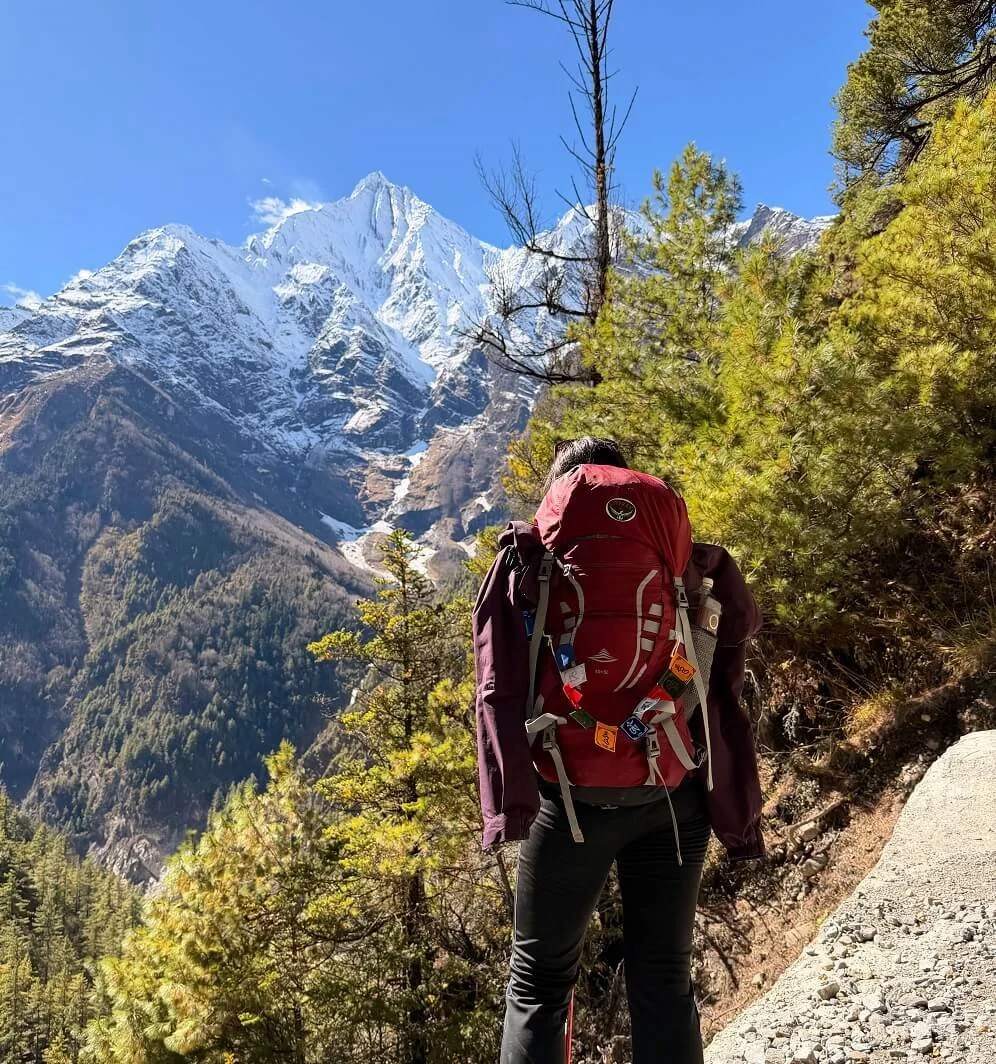
Nepal Packing List: What To Pack for Hiking in Nepal?
/I spent about 3 weeks hiking in Nepal and the biggest question I had to figure out was what to pack.
Should I buy my gear there or should I fork out more for expensive clothing? It also highly depends if I had enough time and if quality is something I should compromise on.
Here's what I discovered: the quality of trekking gear in Nepal is shockingly good and surprisingly cheap.
For most items, buying in Kathmandu is a perfectly fine. But for a handful of core pieces like your base layers, hiking shoes, and a few key items, it's worth getting those sorted before you go.
I had limited time on arrival, so I made sure my essentials were already covered, then filled in the gaps from the excellent shops around Thamel in Kathmandu. Below is my exact packing list, along with my honest take on what to buy at home vs. what to grab in Nepal.
Also read: The Annapurna Circuit Trek Itinerary: A Solo Trekker’s Complete Guide
Disclosure: Do note that some of the links below are affiliate links and every purchase you make here will help support me through the commission I earn at no extra cost on your side.
Should You Buy Gear Before You Go or In Nepal?
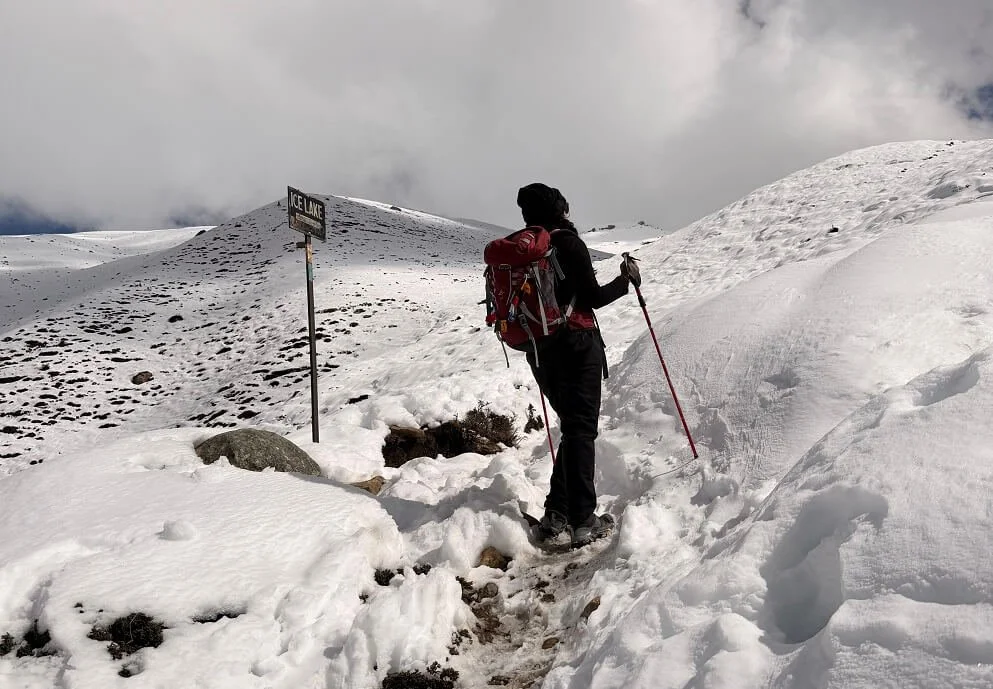
what to pack for nepal? here’s my nepal trekking list
Here’s what I would suggest:
Buy online: Backpacks (40–45L), Hiking shoes/boots (break them in!), fleece tops, base layers, underwear, and anything you're particular about fit or brand on.
Buy in Kathmandu: Down jackets, rain jackets, trekking poles, sleeping liners, microspikes, and most gear items. Goreto Gear Traders in Kathmandu is excellent.
Rent in Kathmandu: You can rent a backpack too but I thought the quality was OK and most of it was knock-off brands: not 100% ideal if you want to have a hiking backpack. I did rent from Up To Date Trekking for just 2,000 NPR (approx $13 USD) for 12 days.
I bought almost all of my clothing from Goreto Gear Traders in Kathmandu. The quality rivals big outdoor brands at a fraction of the price: think decent North Face and Mammut alternatives that'll easily survive the trek.
Also read: Things To Do in Pokhara That's More Than Trekking (2026)
My Complete Nepal Packing List: What To Pack for Trekking in Nepal?
Below is everything I brought on my 12-day Annapurna Circuit trek. You can save it or grab a copy of my How to Hike Annapurna Circuit Solo digital guide.
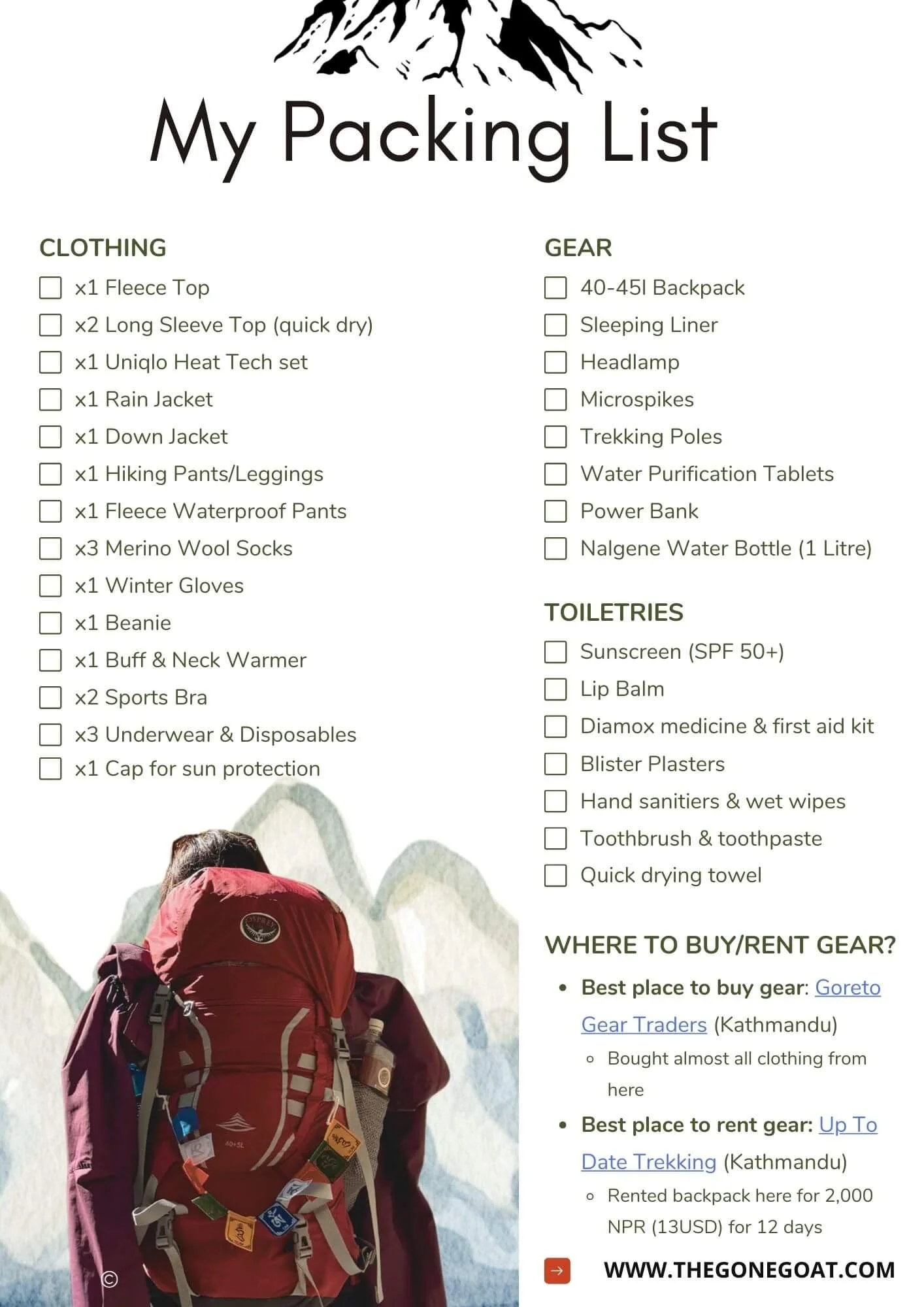
my nepal trekking list
| Item | Notes | Link |
|---|---|---|
| x1 Fleece Top | Warm mid-layer, key for cold mornings/evenings. | Get Here |
| x2 Long Sleeve Tops (quick dry) | Quick-dry fabric essential. Merino or synthetic both work well. | Get Here |
| x1 Heat Tech Set | Great lightweight base layer. Buy before you go. | Get Here |
| x1 Rain Jacket | Lightweight & packable. Can buy in Kathmandu for great value. | Get Here |
| x1 Down Jacket | Critical for high altitude nights. | Get Here |
| x1 Hiking Pants / Leggings | Convertible pants ideal. Quick-dry is key. | Get Here |
| x3 Merino Wool Socks | Worth buying quality at home. Prevents blisters. | Get Here |
| x1 Winter Gloves | Needed for high passes. Don't skip this. | Get Here |
| x1 Beanie | You absolutely need a beanie. | Get Here |
| x1 Buff & Neck Warmer | Doubles as face cover in dusty/cold conditions. | Get Here |
| x1 Cap for Sun Protection | High altitude sun is intense. UV protection important. | Get Here |
Also read: Where To Trek In Nepal? 15 Best Treks in Nepal From Beginners To Hard
Essential Gear
Gear is where people tend to over-think and overspend. This is my absolute must-have items that genuinely matter, everything else is optional or easily sorted in Kathmandu.
1. Osprey 38–45L Backpack
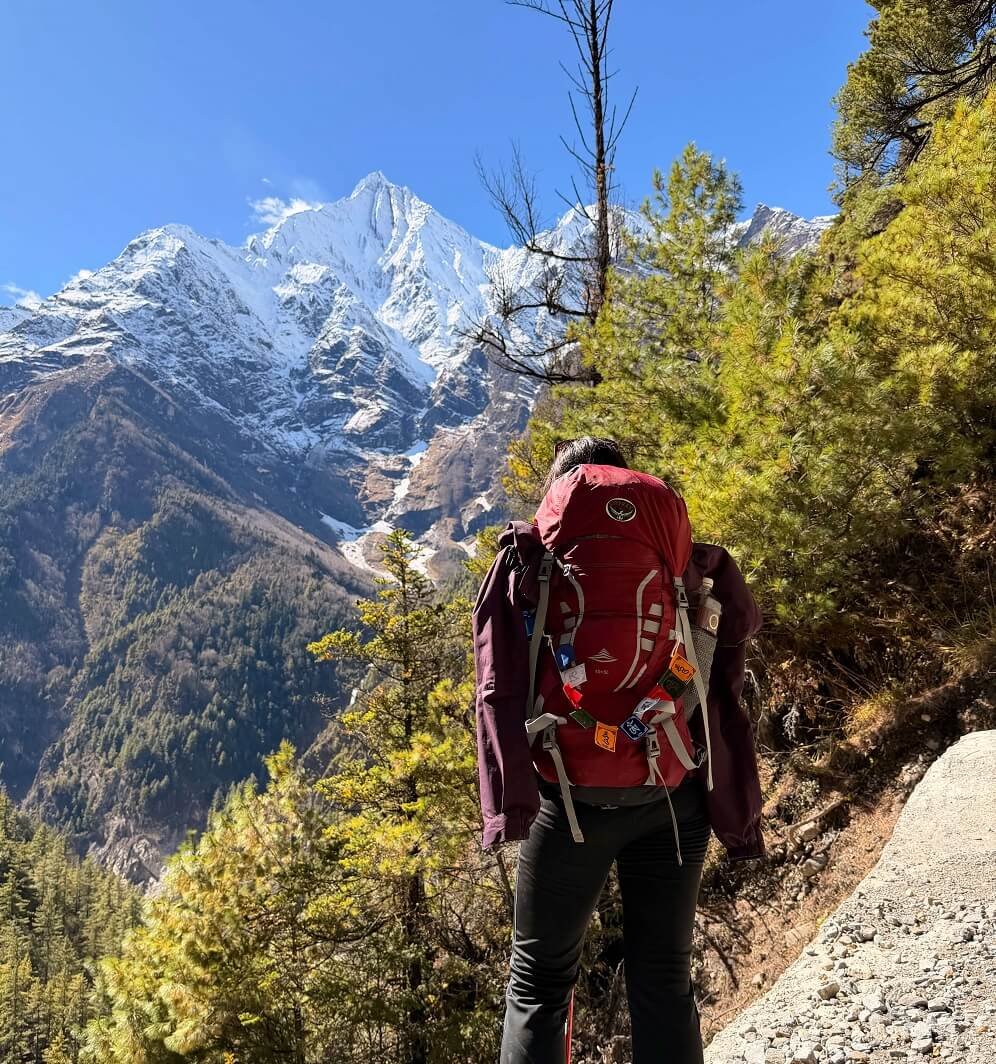
osprey backpack in nepal
You can get Osprey Kyte 38 litres or Osprey Fairpoint 40 litres for this hike. The Osprey Fairpoint 40 is highly-regarded as one of the lightest backpack that fits all specs,
It is also a backpack that it is highly durable, versatile, sleek without all the extra handles and zippers falling over making it one of the best minimalist travel backpack for hiking.
It makes no attempt to look like your typical hiking back, but what’s great about it is that it is built to take a lot of beating no matter the terrain.
Even when you fill it up fully, it feels very light and the chest/waist straps are great for that extra padded support and stability.
It never feels heavy or weighs you down which is why I always believed is Osprey when it comes to hiking or backpacking in the outdoors.
2. Salomon Shoes
This has been a best seller all around. The Salomon 6 GTX has evolved into an even more effective hiking shoe thanks to descent control technology that efficiently tackles technical hikes and really shines during tough descents.
I highly recommend buying Salomon shoes for this hike.
3. Trekking Poles
These are non-negotiable on the descent from Thorong La. Your knees will thank you. You can rent a pair in Kathmandu for a few dollars, or pick up a decent set from the Thamel shops. Carbon fibre is nice but not worth the premium here.
4. Headlamp
Power cuts happen regularly at mountain teahouses, and you'll be doing early morning starts on big pass days. Bring a headlamp with fresh batteries and don't rely on your phone torch.
5. Sleeping Liner
Teahouses provide blankets, but they're not always the freshest. A lightweight sleeping liner like this adds a layer of warmth and hygiene. Silk is lightest; fleece is warmer. Either works depending on what you prefer.
6. Microspikes
Essential if you're crossing any high altitude pass after snowfall. Conditions vary hugely by season so it is best to check recent trek reports before you go. You can get it in Kathmandu.
7. Water Purification Tablets
Boiling water is available at most teahouses but water purification tablets are a lightweight backup and useful when you're filling up from streams. Don't skip this one.
8. Power Bank
Charging at teahouses isn't always reliable at higher altitudes. Bring a large capacity power bank — 20,000mAh will comfortably be enough.
9. Nalgene Water Bottle (1 Litre)
I used the Nalgene water bottle to fill hot water at night and sleep with it and then drink the water the next door. It was so useful and important. Bring this for your trek regardless!
10. Gaiters
Not always on packing lists, but genuinely useful for snowy sections near the pass. Low gaiters are fine and pack down small.
Pro Tips for Packing for Nepal for Trekking
Keep your pack under 8–10kg. You'll want to carry it yourself — porter costs add up and you'll move faster without one.
Wear in your hiking boots before you leave. Blisters at altitude are a serious issue. At least 3–4 weeks of regular use before your trek.
Leave a bag at your hotel in Kathmandu. You don't need everything on the trail and lock away valuables and anything not needed for trekking.
Bring cash (NPR). ATMs exist but become scarce higher up.
Don't over-buy clothing and only buy what you need.
Also read: 12 Things To Do In Kathmandu That's Soul Searching
Like this story? PIN IT!