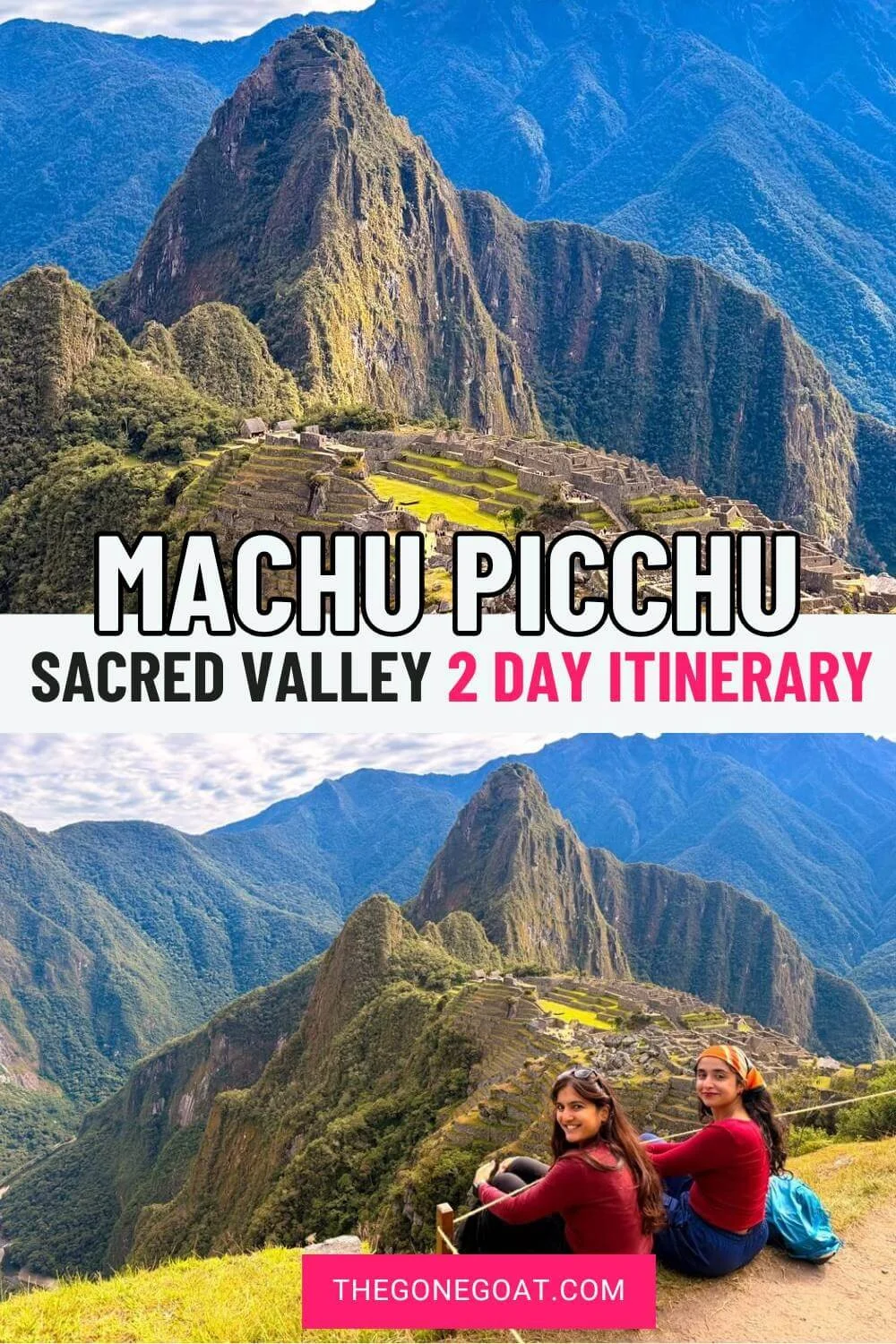
Machu Picchu & Sacred Valley 2-Day Tour Itinerary: My Experience
/Not everyone has five days to spare for Machu Picchu or to do a hiking trail to get there especially if you have chosen to hike another region in Peru.
I chose to do the Machu Picchu and Sacred Valley tour in 2 days with Alpaca Expeditions.
If you're short on time but still want the Sacred Valley done properly, two days is enough to get the full picture. We saw the ruins, the history, the views and had a great overview of the region without being overly exhausted.
This tour is great if you didn’t get time to book your Machu Picchu tickets and be fussed about logistics. You get your trains, permits and get to see Circuit 1 (which is the panoramic route of Machu Picchu).
If you're working with a tight window and still want everything sorted for you rather than piecing it together yourself, this itinerary is worth doing!
It's also just less mentally taxing when you're not the one juggling train times and entry slots on top of trying to actually enjoy where you are. I read so many people’s haywire experience of scrambling to get tickets like either lining up or booking months or up to a year ahead.
p.s: If you've got more time on your hands, the Lares Trek is worth looking at as the longer version of this same trip. We initially wanted to do this as you get four days walking, sleeping in tents at altitude, arriving at Machu Picchu through the Sun Gate on foot.
Alpaca Expeditions runs a solid version of that one too, and there's something to be said for reaching the citadel after days of climbing instead of rolling in on a bus.
Day 1: Alpaca Farm, Pisac, Ollantaytambo, and the Train
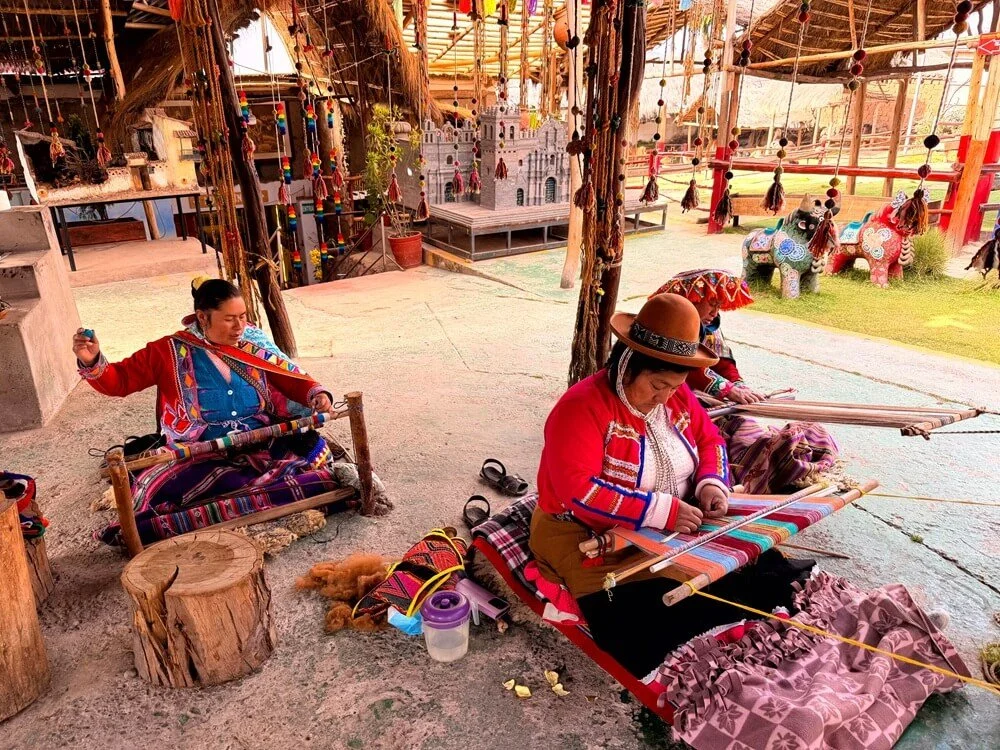
at the Awanacancha Alpaca Farm
We got picked up from our hotel in Cusco early and the first stop was all about the Sacred Valley of Peru.
The first stop on our itinerary was Awanacancha Alpaca Farm, and I read about it before visiting. The farm promotes sustainable practices where many of the products we saw from souvenirs to clothing are made from alpaca wool produced ethically.
We got to dig deeper into Andean practices like learning about the spinning and dyeing process of wool, using natural dye
I've seen a hundred alpaca sweaters for sale in every market in the Andes at this point, but watching raw wool get dyed with cochineal and local plants before it becomes anything gave me a different appreciation for it.
You also get to interact with feeding llamas, alpacas, vicuñas and guanacos.
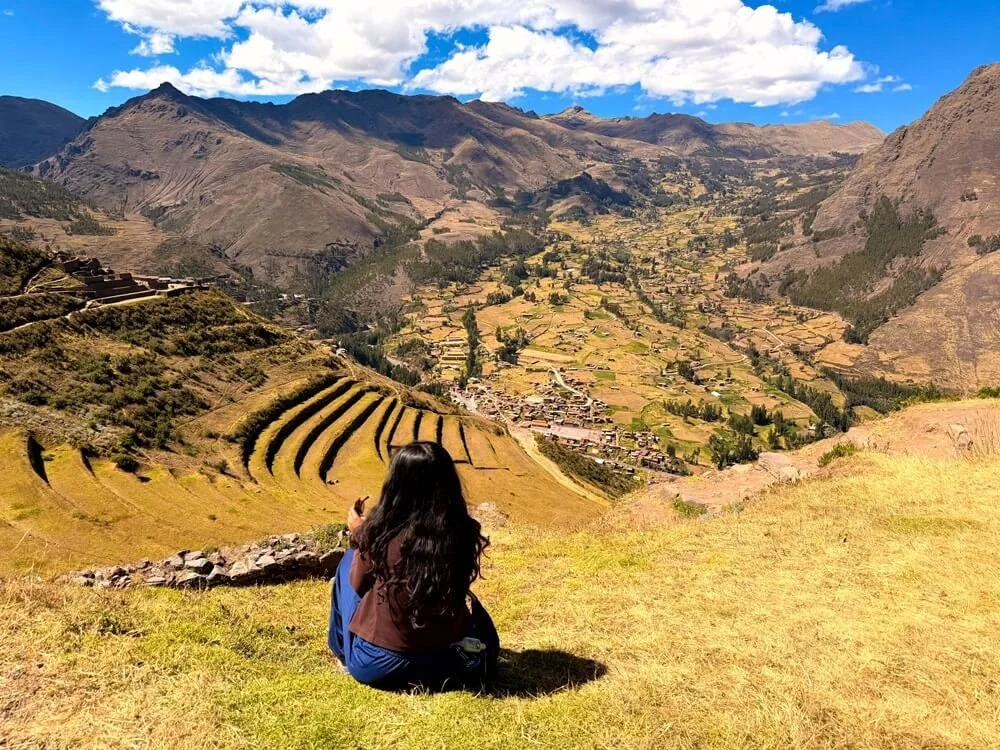
one of the sacred valley viewpoints in pisac
After that we headed to the Sacred Valley viewpoint and Pisac Q'allaqasa (citadel). There was a series of short hikes and walks we did among the ruins but the history was also super important to us. The guides went in detail about the Pisac ruins detailing why this was one of the most important Inca archaeological sites in Peru's Sacred Valley.
The site was served for military, religious, and agricultural purposes, reflecting its importance within the Inca Empire. The archaeological complex is divided into several sectors, each with a different function during the Inca period.
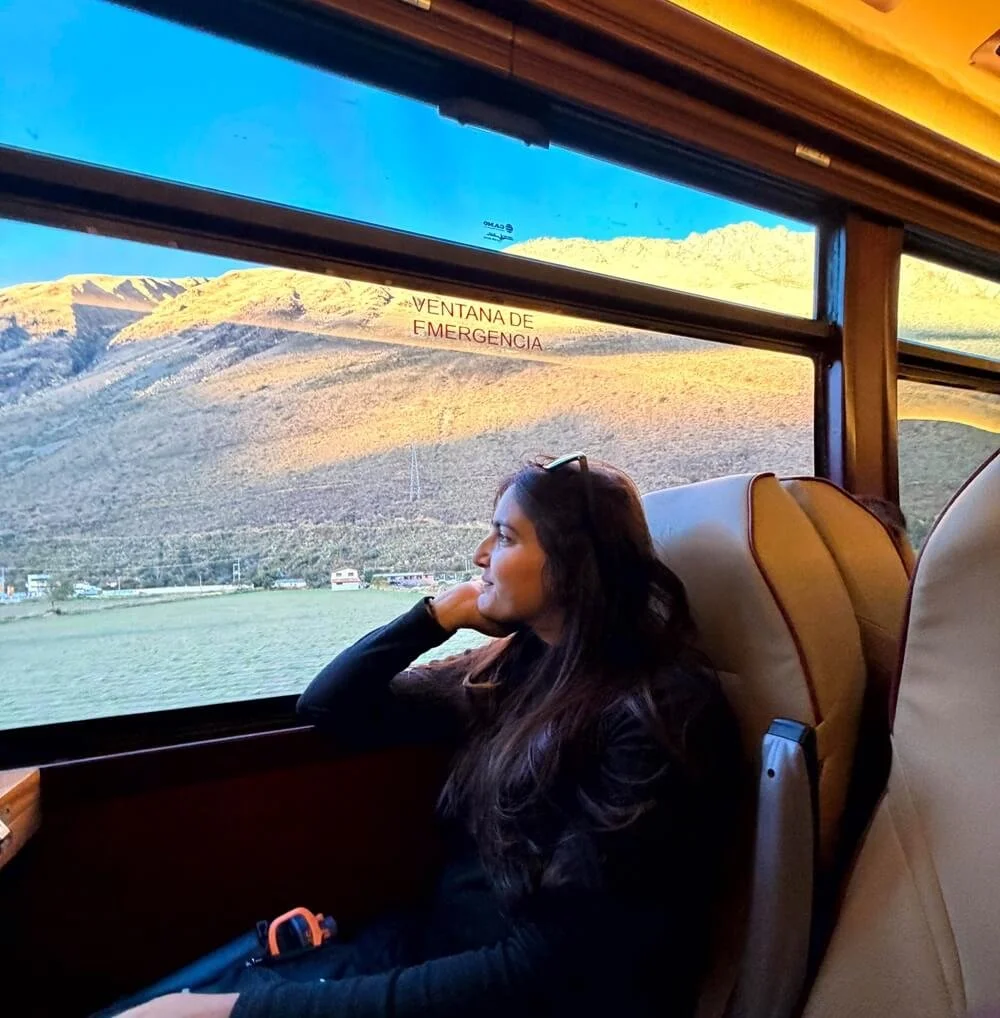
taking the train to aguas calientes
We spent about 2 hours here before breaking for a buffet stop at Urubamba and then headed to Ollantaytambo. It was such a gorgeous place but incredibly busy as everyone leaves from here to catch the train to Aguas Calientes.
We were short on time as we needed to catch the train which left at 4.36pm. The stonework at the Temple of the Sun is on another level, you will see massive monoliths fitted together in a way that still doesn't fully make sense standing in front of it.
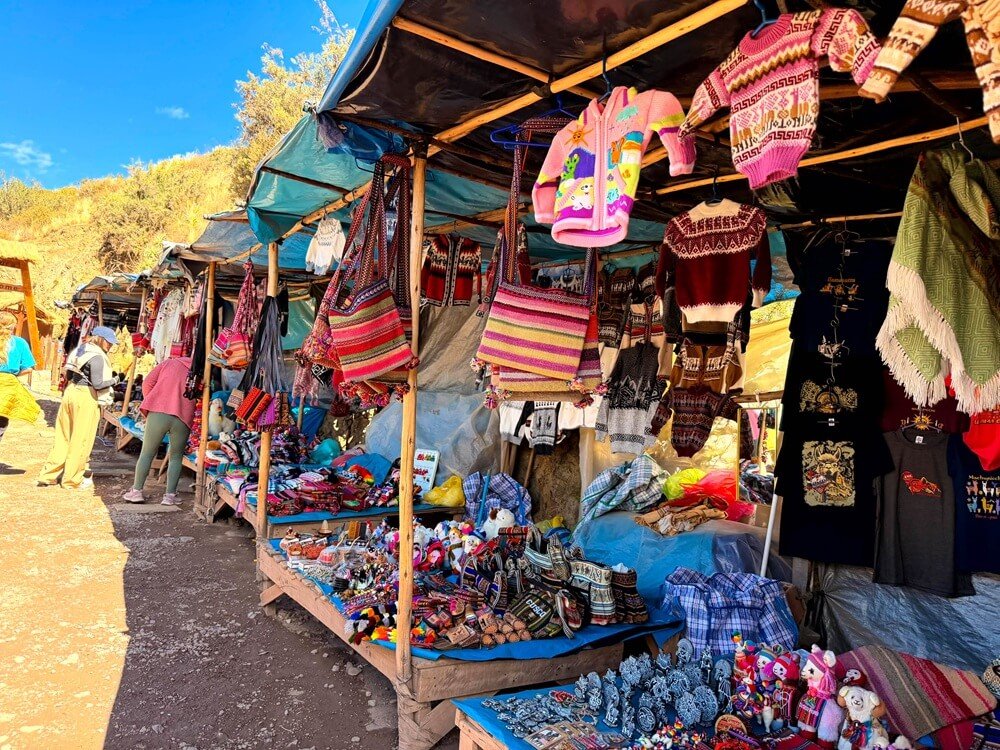
at the ollantaytambo markets
What got me about Ollantaytambo though is that the town below the ruins isn't a reconstruction. People actually live there, in the original Inca street layout, with the same water channels still running through it.
From there, we caught the train to Aguas Calientes, leaving around 4:36pm, and it's genuinely one of the more scenic train rides I've done. Our train ride was with Inca Rail. It took about 2 hours but the journey was super scenic. You watch the terrain shift from open valley into cloud forest, orchids and thick vegetation as we passed through mountains.
We rolled into Aguas Calientes in the dark and proceeded to have dinner that day. There were other big groups doing this trek but some were even doing the Salkantay trek which seemed to be the most popular option.
Day 2: Machu Picchu: Doing the Panoramic Route - Circuit 1
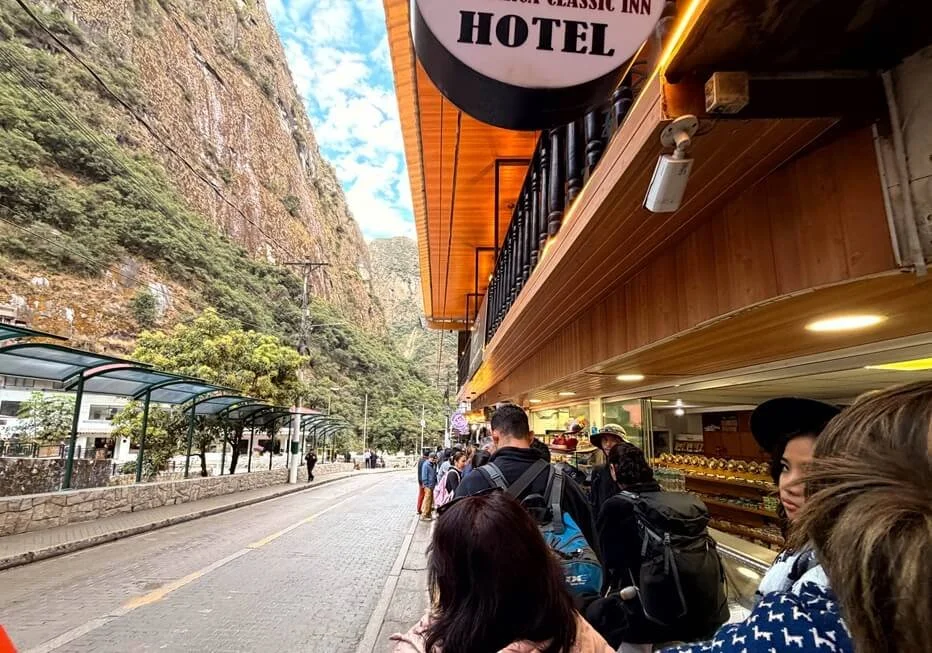
queuing up before heading up to the starting point of machu picchu
We were up before the sun, again, packing only a small backpack (sunscreen, insect repellent, water, passport, camera) and leaving the rest of our bags at the hotel.
You also should be warned that there is a bus queue. Buses don't even start running until 5:30am and people were already lined up when we got there.
But your guide will be with you and for me it is really nice seeing how everyone was decked out in all kinds of ponchos — it felt like a fancy dress competition and people putting their best dress on for Machu Picchu.
The ride up is only about 25 minutes and winds up switchbacks that get steeper and greener the higher you climb. We reached the entrance and saw so many people but it was just a series of stairs and it took us about 30-45 minutes before we reached Circuit 1.
Here’s a quick breakdown of the circuits
A quick breakdown of the Machu Picchu circuits
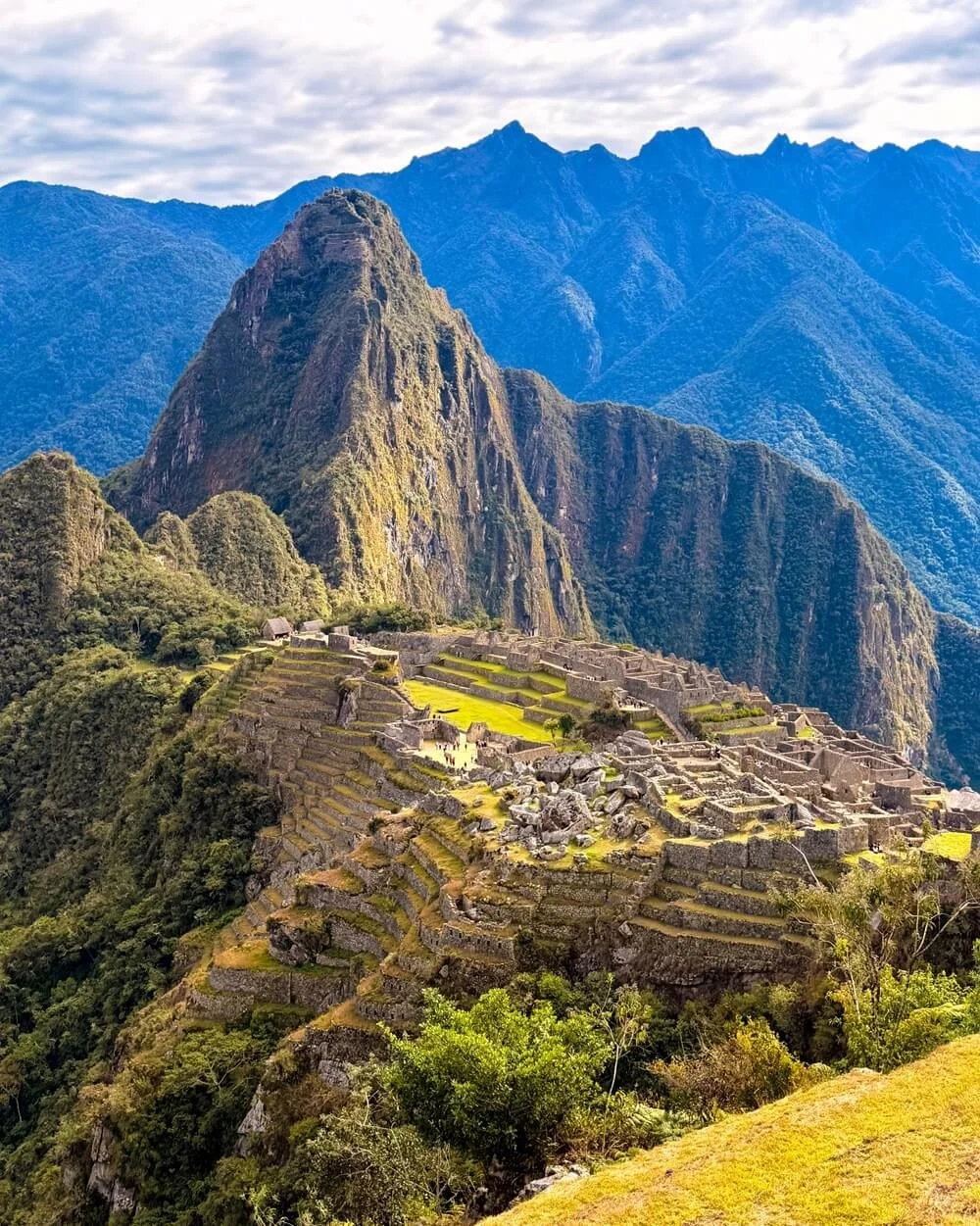
a view of machu picchu from circuit 1 panoramic trail
Since 2024, Peru's Ministry of Culture reorganized the site into three main circuits, with several route variations under each. You pick your circuit when you book your ticket, not at the gate, and once you're on it you can't switch or backtrack.
It's one-way movement through the site.
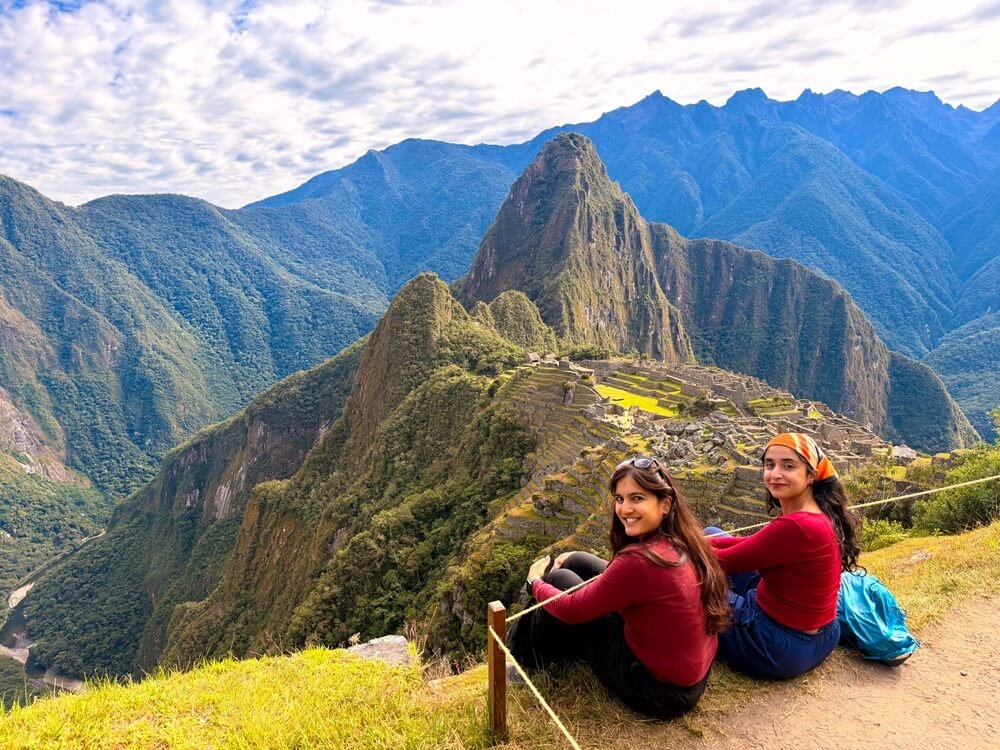
another viewpoint at circuit 1 of machu picchu at the panoramic trail
Circuit 1 (Panoramic) is the high route which is what we did. You get the upper agricultural terraces, the classic postcard viewpoint, and depending on the route, access to the Sun Gate. This is the one most people mean when they picture that iconic Machu Picchu photo. It doesn't take you through the lower ruins though, so if you want the up-close temple and plaza walkthrough, Circuit 1 alone won't give you that.
Circuit 2 (Classic) is the most popular for a reason. It combines the postcard viewpoint with a proper walk through the temple complex, the Sacred Plaza, and the main ceremonial sectors. If you're only doing one circuit and want the fullest picture of the site in one go, this is usually the pick.
Circuit 3 (Royal) covers the lower sector exclusively. No upper terraces, no panoramic viewpoint, but it's where you pair up with the mountain hikes, Huayna Picchu, Huchuy Picchu, or the longer Gran Caverna route behind Huayna Picchu.
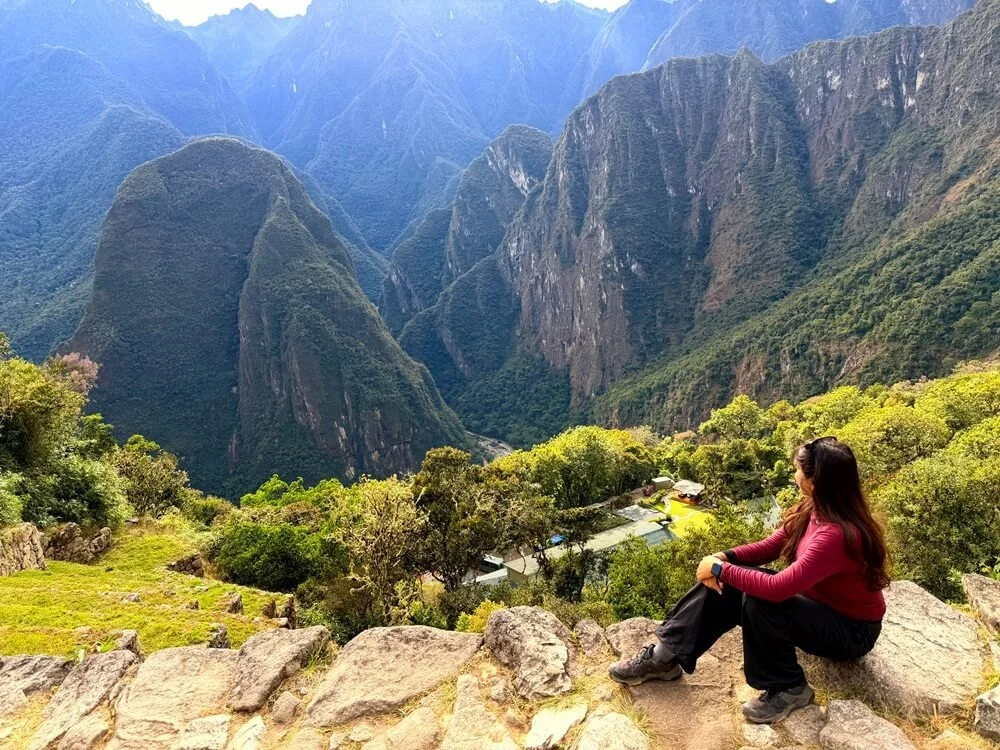
the other viewpoints along the way
We went with a route that gave us the panoramic views. We didn’t do Huayna Picchu (it costs $75 more) and since spots for that hike are capped at 400 a day and go fast. The climb itself is about 45 minutes up, 30 minutes at the summit if you want to sit and actually take it in, then 45 back down. It's steep in places and there's exposure, but it's short enough that it doesn't turn into a slog.
Whichever circuit you end up on, do yourself a favour and use the restrooms before you go in (about 2 soles). Once you're through the gate, you can’t really go our.
Our guide went extensively about the history of the ruins like why Machu Picchu was built in the mid-1400s by the Inca emperor Pachacuti to serve as a private royal estate. So even if we didn’t get to go inside the ruins, seeing it from above gave us enough insights to know why it was abandoned.
Getting Back Out
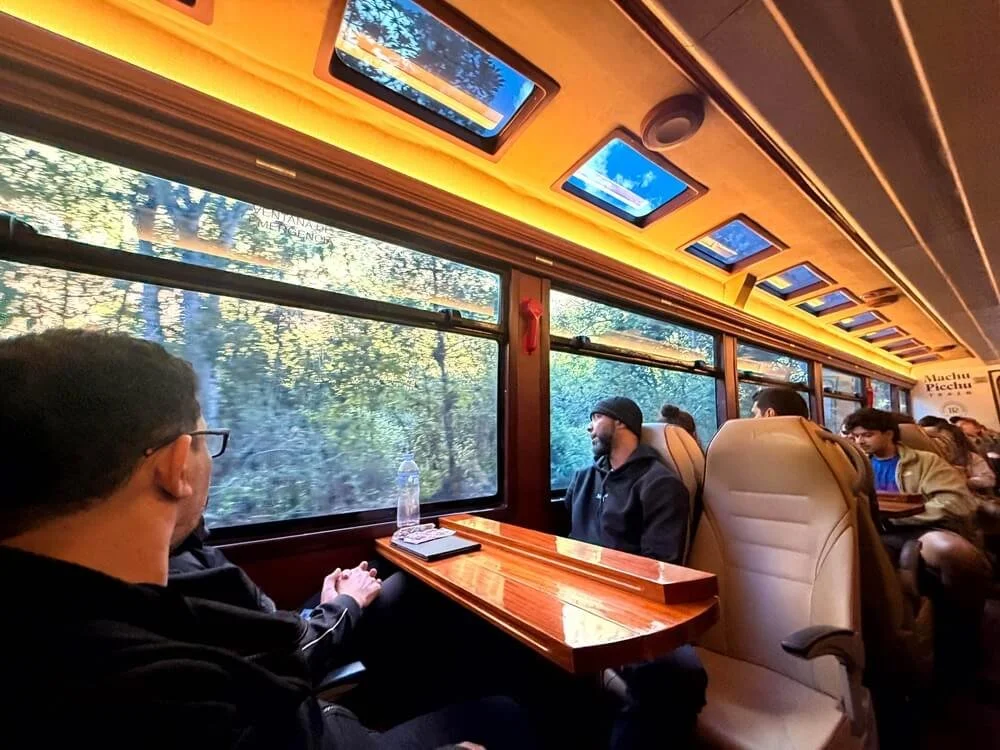
taking the train back
We made it back down to Aguas Calientes by around 12.15pm and grabbed lunch in town before the train (not included in the tour).
Our return train to Ollantaytambo left at 2:10pm. We stuck with the standard Expedition train, which was perfectly comfortable with big windows, though if you'd rather spend the extra for the later Vistadome option with the panoramic glass roof and onboard entertainment, that's there too for around $75USD.
Transport was waiting for us at Ollantaytambo to take us the rest of the way back to Cusco, and we got dropped right at our door around 8pm. It was a looong day but worth it for the itinerary we did.
A Few Things I'd Tell You Before You Go
If you're planning this same two-day version, a handful of things would've saved us some scrambling:
Book your circuit and any mountain add-on well ahead of time. Huayna Picchu especially sells out months in advance during peak season.
Bring cash in small soles for the little things, the bathroom before entry, extra snacks in Aguas Calientes, last-minute market purchases in Pisac. Cards aren't always an option and ATMs aren't exactly convenient once you're deep into the itinerary.
Pack a small back-pack for Machu Pichu and small luggage for the trip. Backpacks larger than 40 x 35 x 20 cm (16 x 14 x 8 inches) or weighing over 5 kg (11 lbs) are not allowed inside Machu Picchu. If your bag is too big, you must store it in the paid lockers outside the main entrance gate before entering.
Layer up. It was cold in the morning but by the time we reached Machu Picchu it was pleasant and quite humid.
Altitude matters more in the Sacred Valley than people expect, even though it's lower than Cusco. Give yourself a day or two to acclimatise in Cusco before you start this itinerary if you can, rather than jumping straight in on arrival.
And don't underestimate how much walking is packed into what looks like a relaxed two-day itinerary on paper. Between the ruins, the market, and Machu Picchu itself, we were on our feet most of both days so I would still wear hiking shoes.
Was Two Days Enough?
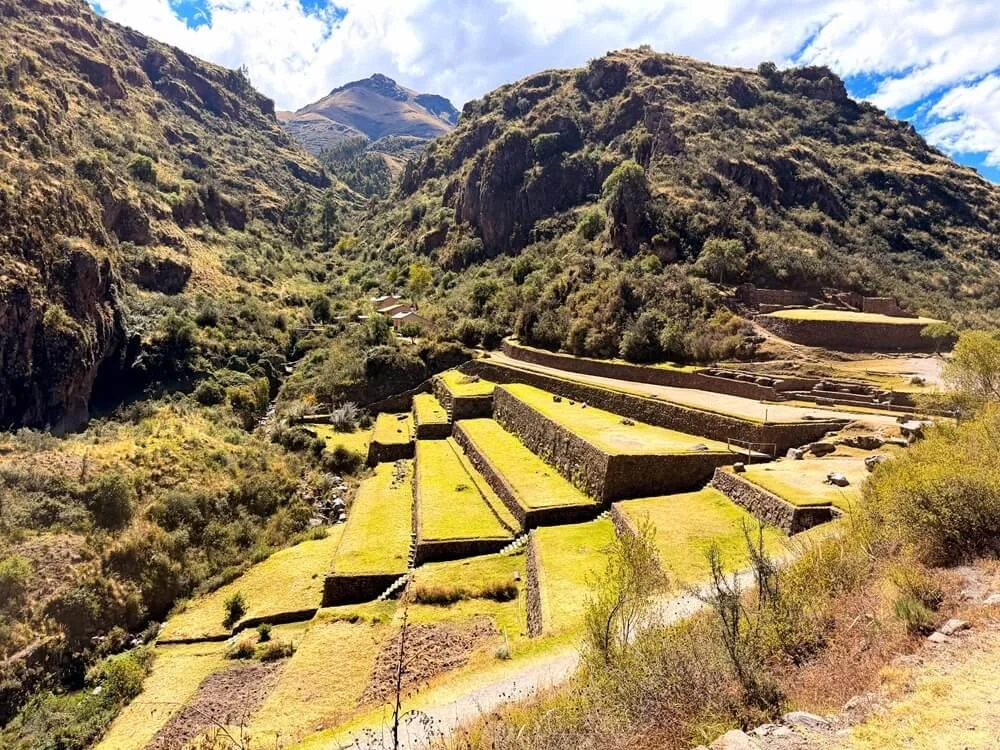
some of the archaelogical ruins on the machu picchu and sacred valley tour
For where we were at, yes. Two days gave us the Sacred Valley properly, not rushed through as an afterthought before the “main event,” and it gave us Machu Picchu itself without cramming a train, a mountain hike, and an archaeological deep dive into a single frantic day.
Looking back, I don't think a longer version would've added much beyond more walking and more nights away, not necessarily more understanding of the place.
If you're deciding between the trek and the shorter version, it really comes down to how much time you've actually got. You can do the hiking version like Lares Trek or Salkantay trek, but a chilled out option like this 2 days Machu Picchu and Sacred Valley tour was the sweet spot for me.
Also read: Hiking the Cordillera Huayhuash Circuit Trek: Peru's Best-Kept Hiking Secret
Like this story? PIN IT!